
 EN
EN
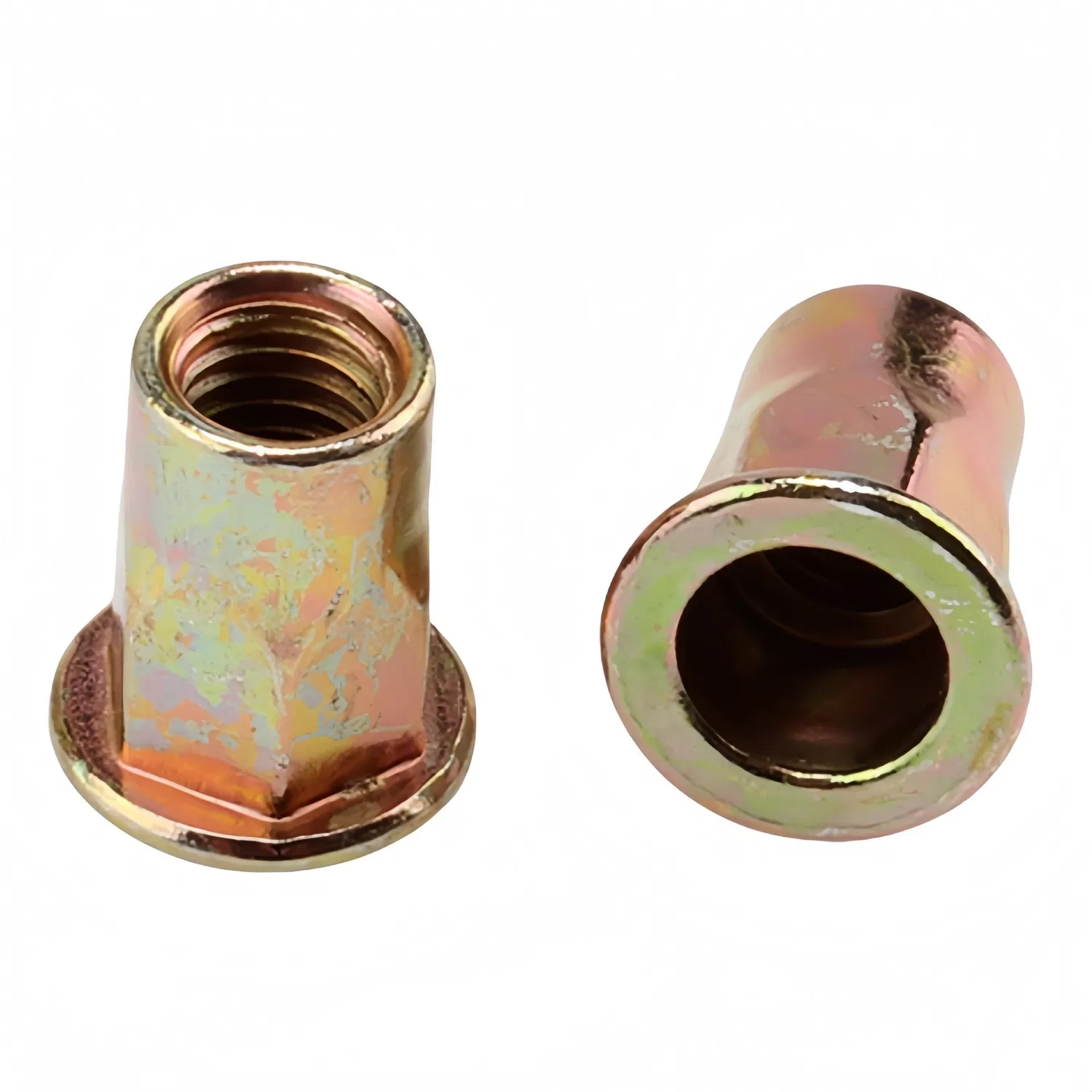
Design Innovation: How the Flat Head Half Hex Body Rivet Nut Solves Dual Challenges
Integrated geometry: Combining flush-mount flat head with torsion-resistant half-hex body
What makes the flat head half hex body rivet nut stand out is how it brings together two really important characteristics: a super low profile head and special anti-rotation shape. The way it mounts flush means there are no bumps sticking out from surfaces, which is great for things where airflow matters a lot, such as electric vehicle battery casings. And let's not forget about that half hex body part either. It creates resistance at six points when rotated, holding onto torque three times better than those round body options according to tests done under ASTM F2282-19 standards. By combining these elements, this fastener actually solves problems that often plague similar components in real world applications.
- Vibration-induced loosening in dynamic environments
- Interference with adjacent components in tight spaces
By integrating these functions into a single fastener, manufacturers achieve reliable, space-efficient fastening without secondary locking features or post-installation machining.
Material efficiency: Enabling reliable fastening in thin substrates (≤1.5 mm) without protrusion or pull-through
When working with thin materials, this fastener tackles common problems by spreading out the load more effectively. Its flat head has a wide 120 degree contact area that cuts down on surface pressure about 40 percent when compared to regular dome heads. This helps prevent material distortion in anything thinner than 1.5 mm. Looking at the design itself, the half hex shape creates a strong mechanical connection that can hold against pull through forces reaching around 1200 Newtons in aluminum according to industry standards from 2022. What makes this solution stand out? It combines practical engineering with real world performance improvements for manufacturers dealing with delicate substrates.
- Zero post-installation machining for flush surfaces
- Elimination of backside access requirements
- 30% weight reduction versus traditional fastening systems
These attributes make it ideal for lightweight, high-integrity applications—including aerospace composites and electronics enclosures—where dimensional control and substrate integrity are non-negotiable.
Superior Torque and Vibration Resistance of the Flat Head Half Hex Body Rivet Nut
Mechanical Interlock: Six-Point Hex Engagement vs. Round-Body Slippage Under Dynamic Loads
Round body rivet nuts tend to slip when rotated, but flat head half hex body rivet nuts work differently. Their six point hex shape actually locks into place against whatever material they're installed in. The way these distribute twisting force means there are about 50% more points of contact compared to regular nuts. This makes them much harder to spin out even when applying torque. When things get really rough, like when dealing with vibrations above 15 Gs which happens all the time in places such as robotic arms or conveyor belts, these special nuts stay put while standard round ones just fall apart. Tests on M8 sizes show they can handle between 35 and 60 Newton meters of torque, which beats knurled options by around 30% when it comes to absorbing vibrations from machinery operation.
Real-World Validation: Performance in EV Battery Frames and Aerospace Avionics per ISO 16750-3 and ASTM F2296-22
Real world tests back up what engineers have been saying about these components for years. Take electric vehicle battery enclosures, which face constant temperature changes and metal fatigue issues. Half hex rivet nuts actually stay put with no movement whatsoever after going through 500 hours of that tough ISO 16750-3 vibration test. When it comes to aerospace applications too, these fasteners pass the ASTM F2296-22 shear strength standards needed for attaching trays to those super thin aluminum panels measuring 1.2mm or less. And here's something interesting they completely avoid those annoying pull through failures that happen so often with regular round body alternatives. The secret seems to lie in their unique hybrid design that somehow manages to reduce stress concentrations by around 40 percent in magnesium parts compared to standard options on the market today.
Performance Benchmarking: Flat Head Half Hex Body Rivet Nut vs. Conventional Alternatives
Flat head half hex body rivet nuts offer real benefits when compared to standard round body and countersunk designs that have been around for years. The unique shape actually provides about 30 to 50 percent better torque resistance according to those ISO 16750-3 vibration tests we all know about. Plus, the flat head sits right against the surface without sticking out like countersunk versions tend to do. These features become really important when working with thin materials under 1.5 mm thick. Regular rivet nuts just don't hold up as well in these situations, showing roughly 22% more failures during pull through testing according to ASM International's research from last year.
| Torque Resistance | Vibration Loosening Risk | Thin-Material Reliability | |
|---|---|---|---|
| Half Hex Body | 35–50 Nm | Low | Excellent |
| Round Body | 20–30 Nm | High | Moderate |
| Full Hex Body | 40–55 Nm | Low | Poor (<1.2 mm) |
What makes the half-hex body so effective is its mechanical interlock feature which stops rotation when things get shaky under dynamic loads. Round body designs just aren't cut out for this kind of stress since they start slipping at torque levels that are actually 15 to 20 percent lower. When it comes to installation, there's another benefit worth mentioning. The insertion force needed drops by about a quarter compared to those full hex versions because of how the part aligns partially cylindrical during setup. Engineers who need to juggle multiple factors like resisting vibrations while saving on materials and achieving those clean flush finishes will find this design addresses problems that have plagued traditional fasteners for years. It really does fix what was broken in older solutions without sacrificing performance.
Targeted Application Guidance for Flat Head Half Hex Body Rivet Nut Deployment
Thin-material assemblies: Best practices for aluminum, magnesium, and composite substrates <1.5 mm
When working with ultra thin materials like aluminum body panels measuring between 0.8 and 1.2 mm thick, magnesium instrument mounts, or carbon fiber composites, the flat head half hex body rivet nut stands out because it stops surface deformation when installed. Operators should stick to low force hydraulic setting tools rated at 3 kN or below to keep substrates from warping. The flush mount design leaves behind smooth aerodynamic surfaces, something critical for aircraft components. Meanwhile, the half hex body fits snugly into pre punched holes without needing access to the back side of the material. Working with magnesium alloys requires special attention since applying anti galling paste on the threads helps prevent cold welding issues. And when dealing with composite materials, switching to diamond coated mandrels makes all the difference in reducing delamination risks during compression operations.
High-vibration environments: Selection criteria for automotive, EV, and aerospace structural modules
In vibration-intensive applications such as EV battery trays or aircraft avionics bays, prioritize the half-hex body's mechanical interlock over round-body alternatives. Key selection criteria include:
- Torque resistance: Hex engagement withstands 30% higher vibrational torque than round-body nuts (ISO 16750-3)
- Substrate compatibility: Validated for steel-aluminum hybrid joints in chassis components
-
Corrosion resistance: Specify stainless steel variants for salt-spray environments (ASTM B117)
Deploy in automotive subframes, battery enclosure mounts, and satellite bracketry where cyclic loads exceed 5G acceleration. The flat head profile also preserves seal integrity in pressurized compartments.
FAQ
What are the main advantages of the flat head half hex body rivet nut?
The flat head half hex body rivet nut combines a flush-mount profile with a torsion-resistant hex shape, offering improved torque resistance and solving common challenges like vibration-induced loosening and interference in tight spaces.
How does this fastener address issues in thin materials?
Its wide flat head reduces surface pressure by 40%, preventing distortion in thin substrates (≤1.5 mm). Additionally, the half hex design offers strong mechanical connections to withstand pull-through forces of up to 1200 Newtons.
Why is the half hex body preferred in high-vibration environments?
With superior mechanical interlock at six points, the half hex body resists vibrational torque 30% better than round-body options, making it ideal for dynamic applications like electric vehicles and aerospace structures.
What substrates are most compatible with flat head half hex body rivet nuts?
This fastener works well with aluminum, magnesium, and composite materials under 1.5mm thickness, offering enhanced reliability without surface deformation or backside access needs.
Table of Contents
- Design Innovation: How the Flat Head Half Hex Body Rivet Nut Solves Dual Challenges
- Superior Torque and Vibration Resistance of the Flat Head Half Hex Body Rivet Nut
- Performance Benchmarking: Flat Head Half Hex Body Rivet Nut vs. Conventional Alternatives
- Targeted Application Guidance for Flat Head Half Hex Body Rivet Nut Deployment
- FAQ