
 EN
EN
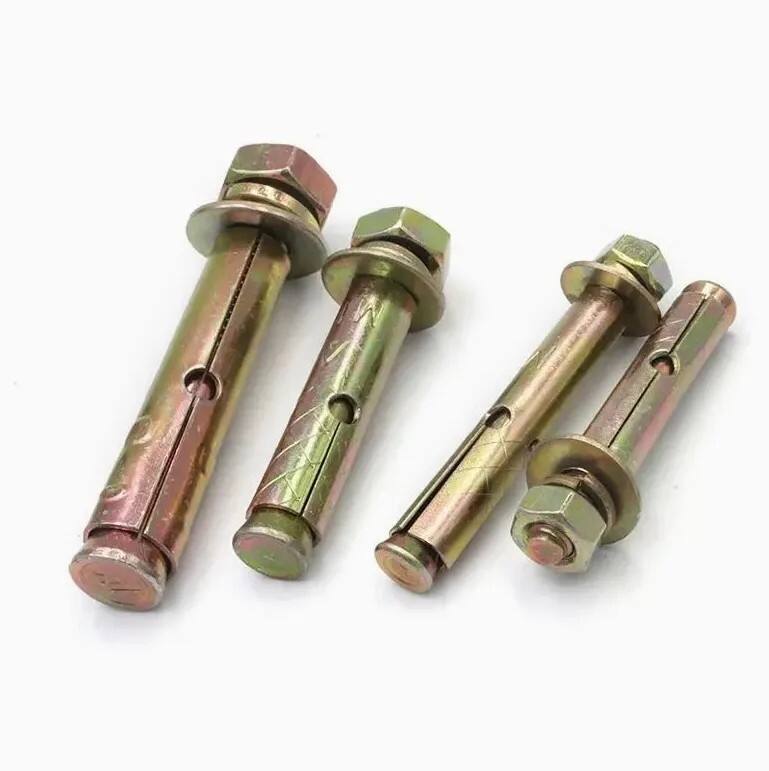
Stainless Steel Anchor Bolts: Grades, Trade-Offs, and Real-World Performance
304 vs. 316 vs. A4 Stainless Steel — Corrosion Resistance in Coastal and Industrial Settings
Selecting the right stainless steel grade is critical for anchor bolt longevity in aggressive environments. 304 stainless steel, while cost-effective and widely used, relies solely on chromium for passivation and is vulnerable to selective leaching and crevice corrosion under persistent salt spray—especially in splash zones or humid coastal settings. 316 stainless steel, distinguished by its 2–3% molybdenum content, delivers markedly superior resistance to chloride-induced pitting and stress corrosion cracking. In practice, this translates to reliable service life in marine infrastructure, chemical processing facilities, and saltwater pool perimeters where 304 would degrade prematurely.
The designation A4 stainless steel (per ISO 3506 and ASTM A193/A320) refers specifically to the 316 alloy family optimized for fasteners—including tighter controls on carbon, nitrogen, and molybdenum content to enhance both corrosion resistance and mechanical consistency. A4’s non-reactive behavior toward chlorinated water and acidic industrial atmospheres makes it the de facto specification for coastal bridges, offshore platforms, and wastewater treatment plants. Crucially, while 304’s chromium oxide layer can be compromised by chlorides, A4 maintains structural integrity without sacrificial degradation.
Avoiding Stress Corrosion Cracking: Duplex Stainless Steels for High-Strength Anchor Bolt Applications
Stress Corrosion Cracking (SCC) remains a leading failure mode for austenitic stainless steels—particularly 304 and even 316—under sustained tensile load in chloride-rich environments. Duplex stainless steels, such as UNS S32205/S32305 (2205) and S32750 (2507), mitigate this risk through a balanced microstructure of ~50% austenite and ~50% ferrite. This dual-phase architecture delivers not only SCC resistance exceeding that of 316 by 2–3× in accelerated testing (per ASTM G36), but also yield strengths above 150 ksi—nearly double that of standard 304 bolts.
Real-world performance confirms this advantage: duplex anchor bolts installed in tidal zones and offshore wind turbine foundations have demonstrated over 30 years of service without SCC initiation, even under cyclic loading and seawater immersion. By contrast, 304 bolts exposed to similar conditions often show permanent deformation at sustained loads above 70 MPa; duplex grades maintain elastic behavior beyond 100 MPa. For mission-critical applications—including bridge cable anchorages, mooring systems, and seismic retrofitting—duplex alloys offer the optimal convergence of strength, toughness, and corrosion resilience.
Galvanized Steel Anchor Bolts: Protection Mechanism, Standards, and Environmental Limits
How Hot-Dip Galvanizing Provides Sacrificial Protection — Zinc Coating Thickness (ASTM A153) and Adhesion Requirements
Hot-dip galvanizing protects anchor bolts through a metallurgically bonded zinc–iron alloy layer formed during immersion in molten zinc. This coating functions sacrificially: when damaged or exposed to moisture and oxygen, zinc corrodes preferentially, shielding the underlying carbon steel. ASTM A153 specifies minimum coating requirements based on fastener size and geometry. For anchor bolts ≥½ inch in diameter, the standard mandates an average coating weight of 2.0 oz/ft² (~3.9 mils or 100 μm), verified via magnetic thickness gauges and validated through bend tests to ensure adhesion integrity.
Surface preparation—caustic cleaning, acid pickling, and flux application—is essential to achieving uniform coating coverage and bond strength. Poorly prepared substrates lead to spalling under installation torque or thermal cycling, exposing bare steel to rapid localized corrosion. Reputable galvanizers follow strict process controls aligned with ASTM A123/A153 and ISO 1461, ensuring coatings meet both thickness and adherence benchmarks required for structural reliability.
When Galvanizing Fails: Performance Gaps in Acidic Soils, Chloride-Rich Concrete, and ISO 12944 C4–C5 Environments
Despite its robustness in benign settings, hot-dip galvanizing has well-documented limitations in highly aggressive exposures. In soils with pH < 5—common in peat bogs, mine tailings, or acid rain–affected regions—the zinc layer dissolves rapidly, reducing effective service life to just 2–5 years, per field studies cited in NACE SP0169 and FHWA-NHI-18-020. Similarly, in chloride-laden concrete (e.g., bridge decks treated with de-icing salts or marine structures), chlorides penetrate microscopic pores in the zinc coating and initiate galvanic corrosion at the steel–zinc interface—accelerating loss of cross-section and compromising bond strength.
ISO 12944 classifies corrosivity into five categories (C1–C5). Standard hot-dip galvanizing (typically 85–100 μm) provides adequate protection only up to C3. In C4 (industrial/coastal) and especially C5 (marine/chemical) environments, galvanized bolts frequently exhibit red rust within 5–10 years, as confirmed by long-term monitoring on UK coastal infrastructure and U.S. DOT bridge inventories. For these exposures, engineers must specify enhanced protection—such as thicker coatings (≥120 μm), duplex systems (zinc + epoxy/polyurethane topcoat), or full material substitution with stainless steel or GFRP.
Advanced Alternatives for Critical Anchor Bolt Installations
GFRP Anchor Bolts: Non-Conductive, Non-Corrosive Performance in Alkaline Concrete and Marine Exposure
Glass fiber-reinforced polymer (GFRP) anchor bolts eliminate electrochemical corrosion entirely, offering a truly inert solution for extreme environments. Unlike metallic anchors, GFRP is immune to chloride attack, alkali-silica reaction, and hydrogen embrittlement—making it uniquely suited for cast-in-place applications in high-pH fresh concrete and tidal exposure zones. Its tensile strength (up to 600 MPa) approaches that of Grade 60 rebar, yet its density is just 25% that of steel, simplifying handling and reducing dead load on lightweight structures.
Field validation supports its reliability: eight-year performance data from GFRP anchor installations in Atlantic Coast seawalls—subjected to daily tidal immersion, wave impact, and airborne salt—show zero measurable corrosion, delamination, or strength loss. Additionally, GFRP’s electrical non-conductivity enhances safety in lightning-prone areas and eliminates stray-current interference in rail or transit infrastructure.
Hybrid Coatings (e.g., Zinc-Aluminum, Ceramic-Enhanced Polymer): Extending Service Life Beyond Traditional Methods
Hybrid coating systems bridge the gap between conventional galvanizing and full-material replacement—delivering extended service life where stainless steel may be cost-prohibitive or where GFRP lacks compressive strength. A typical high-performance system combines a zinc–aluminum alloy underlayer (e.g., Zn–5%Al per ASTM A767) with a ceramic-enhanced polymer topcoat. This architecture provides dual protection: the metallic layer offers galvanic sacrifice, while the ceramic polymer forms a dense, low-permeability barrier against chloride ingress and UV degradation.
Per ASTM B117 salt-spray testing, hybrid-coated anchor bolts resist red rust for >4,000 hours, outperforming standard hot-dip galvanizing by a factor of four. Field deployments—including retrofitted bridge anchorages in Florida and offshore pier repairs in the North Sea—report 15–20 year maintenance-free service life, cutting lifecycle costs by up to 40% compared to scheduled replacements. These systems are especially valuable for existing infrastructure upgrades where full material substitution isn’t feasible.
Matching Anchor Bolt Materials to Site-Specific Corrosivity — A Practical Selection Framework
Material selection must align precisely with site-specific corrosivity, as defined by ISO 12944. Begin by classifying the environment:
- C1–C2 (low): Dry, heated interiors or rural atmospheres with minimal pollutants. Hot-dip galvanized carbon steel meets durability and budget requirements.
- C3 (moderate): Urban, light industrial, or inland humid zones with occasional condensation or SO₂ exposure. Here, 304 stainless steel or thick-gauge galvanizing (≥120 μm) offers balanced performance.
- C4–C5 (high/very high): Coastal, marine, heavy industrial, or chemically aggressive sites. In these settings, 316 (A4) stainless steel, duplex alloys, or GFRP are not merely preferable—they are necessary to prevent premature failure.
Beyond ISO classification, account for secondary factors: installation method (cast-in-place bolts face higher alkalinity and early-age chloride exposure), substrate condition (cracked or contaminated concrete accelerates corrosion), and regulatory requirements (e.g., AASHTO LRFD, ACI 318, or EN 1992-1-1 mandate specific material classes for critical connections). This evidence-based framework—grounded in standards, field data, and metallurgical principles—ensures durable, code-compliant anchor bolt specifications every time.
| ISO 12944 Corrosivity Category | Recommended Anchor Bolt Materials | Key Selection Drivers |
|---|---|---|
| C1–C2 (low) | Hot-dip galvanized carbon steel | Low cost, mild environment |
| C3 (moderate) | 304 stainless steel or thick galvanized coating | Moisture and urban pollutants |
| C4–C5 (high/very high) | 316 stainless steel, duplex stainless, GFRP | Chlorides, acids, saltwater |
FAQ
What is the difference between 304 and 316 stainless steel for anchor bolts?
304 stainless steel is cost-effective and suitable for mild environments, but it lacks molybdenum, making it less resistant to chloride-induced corrosion compared to 316 stainless steel. 316 includes a 2–3% molybdenum content, which enhances its performance in coastal or industrial settings.
When should duplex stainless steel be used for anchor bolts?
Duplex stainless steel is ideal for high-strength applications in chloride-rich environments. Its dual-phase structure provides superior resistance to stress corrosion cracking (SCC) and higher strength compared to austenitic grades like 316.
Why is hot-dip galvanizing not suitable for highly acidic or chloride-rich environments?
In such environments, the zinc coating of hot-dip galvanizing suffers rapid degradation due to dissolving in low pH soils or galvanic corrosion in chloride-laden concrete. Enhanced protection or alternative materials like stainless steel are recommended in these cases.
What are the benefits of GFRP anchor bolts?
GFRP anchor bolts are non-corrosive, non-conductive, and lightweight, making them suitable for alkaline concrete and marine settings. They eliminate issues like chloride attack and electrical interference, offering durability in extreme environments.
What is a hybrid coating system for anchor bolts?
Hybrid coatings combine a zinc-aluminum layer with a ceramic-enhanced polymer topcoat for dual protection. These systems extend service life and outperform traditional galvanizing, making them ideal for infrastructure upgrades.
Table of Contents
- Stainless Steel Anchor Bolts: Grades, Trade-Offs, and Real-World Performance
- Galvanized Steel Anchor Bolts: Protection Mechanism, Standards, and Environmental Limits
- Advanced Alternatives for Critical Anchor Bolt Installations
- Matching Anchor Bolt Materials to Site-Specific Corrosivity — A Practical Selection Framework
-
FAQ
- What is the difference between 304 and 316 stainless steel for anchor bolts?
- When should duplex stainless steel be used for anchor bolts?
- Why is hot-dip galvanizing not suitable for highly acidic or chloride-rich environments?
- What are the benefits of GFRP anchor bolts?
- What is a hybrid coating system for anchor bolts?