
 EN
EN
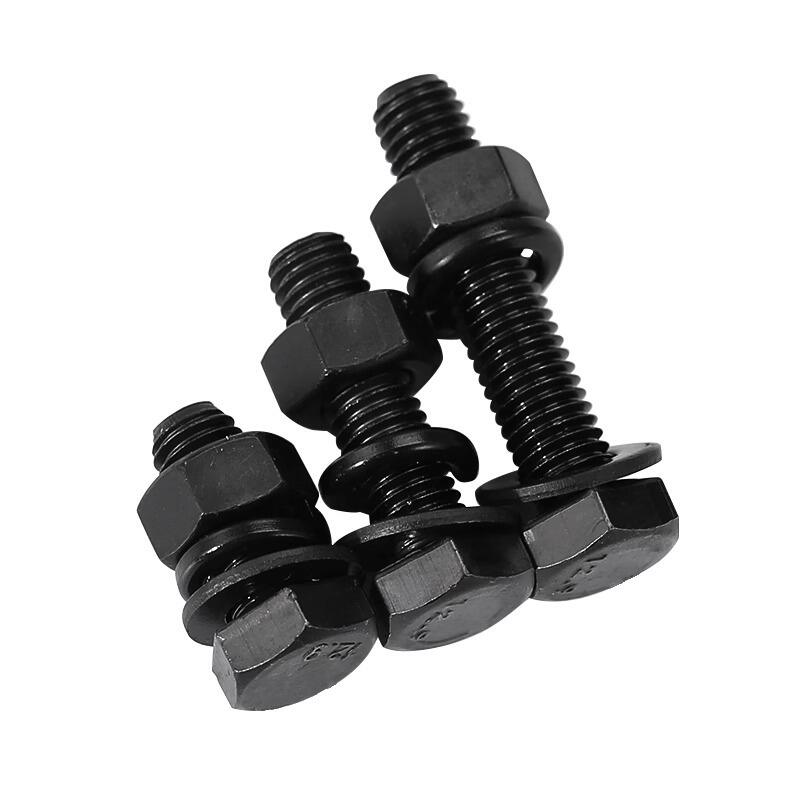
Core Torque Verification Methods for High Strength Bolts
Verifying the correct torque on high strength bolts installed in the field requires methods that are both practical and reliable. Each approach accounts for friction and installation variables differently, and the choice depends on required accuracy and joint accessibility. Below are three widely accepted verification methods.
Movement Test (First Movement / Residual Torque)
The movement test—also known as the first movement or residual torque test—measures the torque required to initiate slight rotation of the nut or bolt head in the tightening direction. Using a calibrated torque wrench, the technician applies force slowly until motion begins; the reading at that instant is recorded. This method assumes residual torque closely reflects initial installation torque—if friction conditions remain stable. It is quick, equipment-light, and commonly used for routine quality assurance on structural joints. However, corrosion, rust, or debris can increase static friction over time, causing the test to overestimate actual preload by 10–20% in aged connections. Despite this limitation, the movement test remains a standard first-line check per the Research Council on Structural Connections (RCSC) Specification for Structural Joints Using High-Strength Bolts, because it requires no disassembly or marking of the fastener.
Loosening Test (Breakaway Torque) and Its Limitations
The loosening test measures the torque needed to begin rotating the nut or bolt head in the loosening direction. Though simple to perform, it has well-documented limitations. Breakaway torque is typically lower than installed torque due to post-installation relaxation of thread and underhead friction—and it reflects only the force needed to overcome static friction, not residual clamp force. In slip-critical connections, a low breakaway value may falsely indicate loosening when preload remains adequate. The RCSC explicitly advises against using this method as a sole acceptance criterion, as it cannot distinguish between friction-induced torque loss and true preload reduction. Consequently, the loosening test is best suited for temporary or non-critical assemblies where comparative, rather than absolute, verification is sufficient.
Marking Test and Marked Fastener Re-tightening Method
The marking test involves placing aligned reference marks on the nut (or bolt head) and adjacent steel surface before slightly loosening the fastener. The nut is then re-tightened until the marks realign, and the torque required to reach that position is recorded. This provides a direct orientation-based comparison to the original installation state and helps detect loosening between inspections. A more robust variation—the marked fastener re-tightening method—involves fully loosening the bolt and re-tightening it using the turn-of-nut procedure to re-establish tension, while measuring torque. Because it resets thread engagement and eliminates ambiguity from altered friction conditions, this approach yields higher confidence in preload restoration. The marking test is especially valuable in exposed environments where corrosion or contamination affects friction. While more labor-intensive than the movement test and requiring meticulous documentation of original marks, systematic execution delivers repeatable, traceable results that align with initial installation records.
Standards Compliance for High Strength Bolts Torque Verification
ASTM A325 and A490 Requirements for Structural High Strength Bolts
ASTM A325 and A490 specify mechanical properties, heat treatment, and testing requirements for structural high strength bolts used in steel construction. Both standards mandate minimum preload levels—typically 70% of specified tensile strength—to ensure sufficient clamping force and prevent joint slippage under service loads. Torque verification must use calibrated tools or direct tension indicators (DTIs), and pre-installation calibration checks are required daily per the RCSC Specification. Documentation of all torque readings is mandatory for quality assurance, regulatory compliance, and liability protection. These requirements collectively uphold structural integrity across static, cyclic, and seismic loading conditions.
ISO 16047 Clamp Force Correlation and Field Applicability
ISO 16047 defines standardized laboratory procedures for establishing torque-tension relationships in bolted joints, accounting for variables such as lubrication, surface finish, and thread geometry. While invaluable for developing baseline correlation curves, its direct field applicability is constrained by real-world variability: environmental exposure, surface contamination, and tool wear can shift measured torque values significantly. As a result, inspectors often pair ISO 16047-derived correlations with direct measurement methods—such as DTIs or ultrasonic elongation testing—for critical joints. Regular recalibration of torque tools remains essential to maintain alignment with ISO 16047’s intent: enabling consistent, traceable preload estimation where direct measurement is impractical.
Advanced Non-Destructive Verification of High Strength Bolts Preload
Ultrasonic Measurement for Direct Preload Validation
Ultrasonic measurement directly validates bolt preload by calculating elongation through precise transit-time analysis of high-frequency sound waves traveling along the bolt axis. Unlike torque-based methods—which rely on friction-dependent assumptions—ultrasonic testing quantifies mechanical strain and converts it to clamp force with ±5% accuracy. It requires no disassembly or loosening of the fastener and delivers immediate, repeatable results on installed bolts. This makes it especially effective in applications where torque-tension correlation is unreliable: joints with inconsistent lubrication, mixed surface finishes, or variable thread engagement. Widely adopted in bridges, wind turbine towers, and heavy industrial machinery, ultrasonic verification supports rigorous quality control and mitigates risks of joint separation or fatigue-induced failure.
Strain Gauge and Sensor-Based Monitoring in Critical Joints
Strain gauge and sensor-based monitoring systems provide continuous, real-time assessment of preload in high-value bolted assemblies. Sensors—either bonded to the bolt shank or integrated into load-indicating washers—convert mechanical strain into electrical signals, transmitted wirelessly to centralized monitoring platforms. This enables ongoing evaluation of bolt health under dynamic loads, thermal cycling, vibration, or long-term creep. Typical applications include wind turbine foundations, rail infrastructure anchorages, and pressure vessel flanges. By detecting early-stage preload relaxation, these systems support predictive maintenance strategies and reduce the risk of unplanned downtime. Although upfront costs exceed manual verification methods, the operational reliability, safety assurance, and lifecycle cost savings justify their deployment in safety-critical infrastructure.
FAQ Section
What is the movement test for torque verification?
The movement test measures the torque required to initiate slight rotation of the nut or bolt head in the tightening direction, assuming residual torque closely reflects initial installation torque.
Why is the loosening test not recommended for critical applications?
The loosening test cannot reliably distinguish between friction-induced torque loss and true preload reduction, making it unsuitable as a sole acceptance criterion for critical assemblies.
How does ultrasonic testing validate preload in bolts?
Ultrasonic testing quantifies mechanical strain via high-frequency sound waves and converts it to clamp force with high accuracy, offering reliable preload validation without loosening the bolt.
What are the benefits of strain gauge sensor-based systems?
Strain gauge systems provide real-time, continuous monitoring of bolt preload, enabling predictive maintenance and reducing risks of unplanned downtime.