
 EN
EN
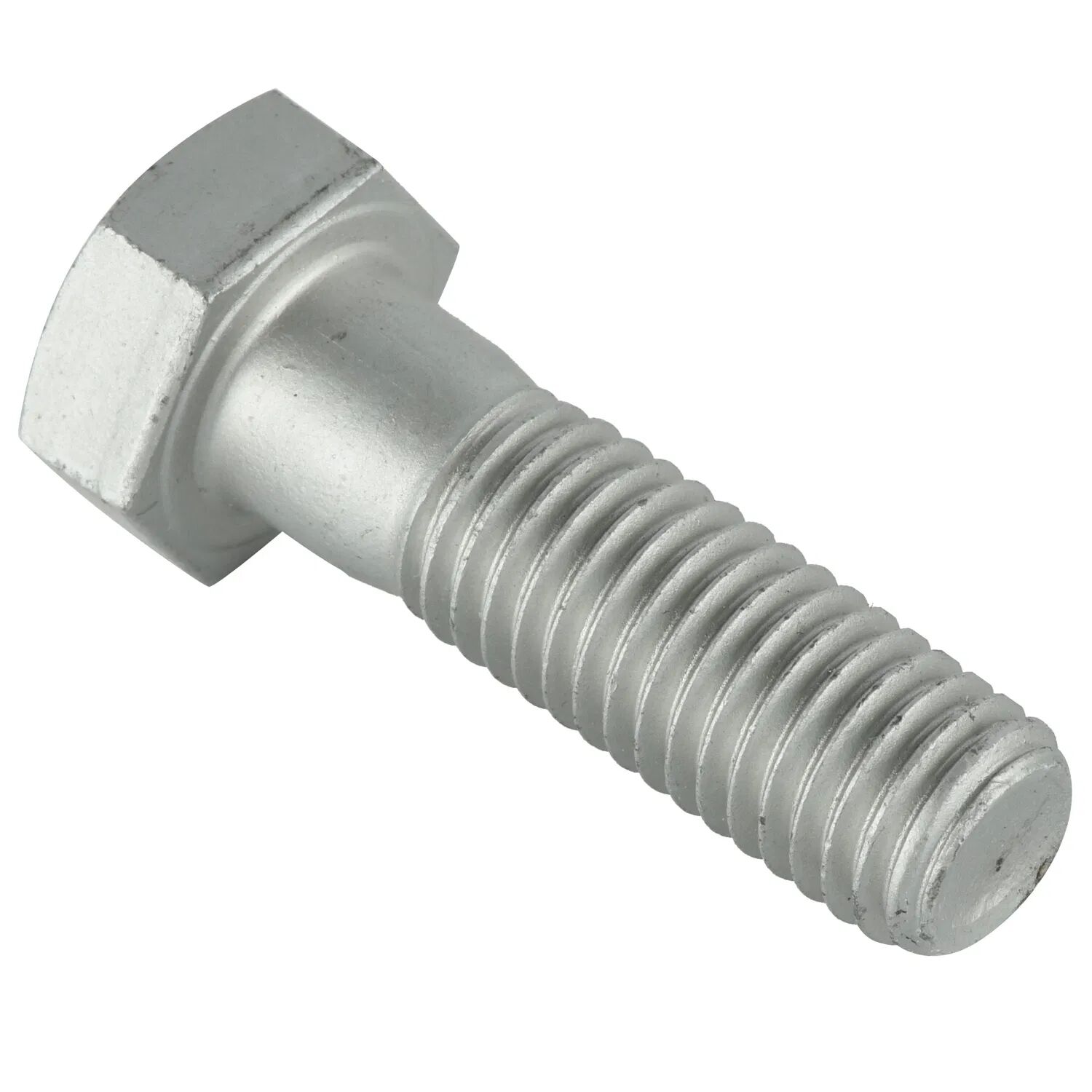
Geometric and Mechanical Advantages of Hexagonal Head Bolt
Hexagonal Symmetry Ensures Uniform Stress Distribution and Load Stability
The six-sided geometry of a hexagonal head bolt is engineered—not incidental. Each 120° internal angle creates symmetrical contact with the bearing surface, distributing clamping force evenly across the washer or joint interface. This uniformity minimizes stress concentration at any single point, a critical advantage under dynamic conditions like vibration, thermal cycling, or impact loading. When tightened to specification, the hex head seats fully and predictably, reducing the risk of localized yielding that can initiate preload loss over time. Engineers specify this geometry in high-integrity applications—such as structural steel connections and heavy machinery frames—where long-term joint stability is non-negotiable. The shape also resists cam-out more effectively than slotted, Phillips, or rounded heads, keeping wrenches and sockets squarely engaged during tightening. As a result, both the fastener and the joined components experience lower peak stresses, diminishing galling, thread stripping, and fatigue initiation—extending service life and preserving preload integrity.
Superior Torque Transmission Compared to Square, Pan, or Socket Head Bolts
The hexagonal head bolt delivers unmatched torque transmission among common head types due to its six discrete, parallel gripping surfaces. A square head offers only four engagement points—and requires a 90° tool repositioning arc—limiting usable torque before slippage. Pan heads lack defined drive geometry entirely and rely on frictional grip, rendering them unsuitable for controlled, high-torque installations. Socket head cap screws provide strong torque transfer but depend on precise alignment of an internal hex key; misalignment or tool wear increases the risk of rounding or stripping under load. In contrast, the external hex design engages standard wrenches or sockets over a 60° arc per side—enabling secure, repeatable tightening with minimal clearance. This allows operators to achieve up to 30% higher torque than comparable square-head fasteners without damaging the head. Its compatibility with ratcheting tools, torque multipliers, and pneumatic impact wrenches further accelerates assembly—making it the de facto standard where consistent, traceable preload is mission-critical.
Load-Bearing Performance and Material Reliability by Grade
Tensile and Yield Strength Benchmarks: ASTM A325, ISO 898-1, and SAE J429 Grade 5/8
A hexagonal head bolt’s load-bearing capacity is defined not by its shape alone, but by the material grade—each standardized to guarantee predictable mechanical behavior. Key benchmarks include ASTM A325 (for structural steel connections), ISO 898-1 (metric general-purpose bolts), and SAE J429 (imperial fasteners). For example, SAE Grade 5 bolts deliver minimum tensile and yield strengths of 120 ksi and 92 ksi, respectively; Grade 8 bolts raise those to 150 ksi and 130 ksi. Similarly, ISO 898-1 Grade 8.8 provides 800 MPa tensile and 640 MPa yield strength, while Grade 10.9 reaches 1000 MPa tensile and 900 MPa yield. These grades reflect rigorously controlled metallurgy and heat treatment—ensuring that a specified Grade 8.8 or Grade 10.9 hex bolt will reliably sustain its rated load when installed correctly. That consistency enables engineers to design joints with known safety margins, eliminating guesswork in critical infrastructure and rotating equipment.
Fatigue Resistance and Clamping Force Retention Under Cyclic Loading
In dynamic environments—such as engines, gearboxes, or wind turbines—fatigue resistance is as vital as static strength. Higher-grade hexagonal head bolts (e.g., SAE Grade 8 or ISO Grade 10.9) are engineered for endurance, with fatigue limits typically 35–50% of their ultimate tensile strength. This performance stems from refined microstructures, controlled grain size, and optimized tempering—reducing susceptibility to crack initiation under repeated stress cycles. Equally important is clamp load retention: the ability to maintain preload despite embedding, creep, or stress relaxation. Grade 10.9 bolts retain over 90% of initial preload after 10,000 load cycles—significantly outperforming lower grades, which may fall below 80%. This reliability preserves joint stiffness and damping characteristics, preventing fretting wear, loosening, and eventual failure. For rotating or vibrating systems, selecting the appropriate grade isn’t just about strength—it’s about sustaining functional integrity over thousands of operational hours.
Installation Efficiency and Tooling Compatibility in Real-World Assemblies
The hexagonal head bolt’s geometry translates directly into field-proven installation advantages—speed, consistency, and broad tool compatibility—without compromising structural performance.
60° Wrench Engagement Advantage: Faster, More Reliable Tightening Than Alternatives
With six equally spaced flat faces, the hexagonal head bolt permits tool engagement every 60° of rotation—twice as often as a square head (90°) and three times more frequently than a slotted or Phillips head. This reduces repositioning time dramatically, accelerating assembly in high-volume production or time-sensitive maintenance. More importantly, the frequent engagement points allow technicians to apply torque from multiple angles—even in partially obstructed access zones—while maintaining control and minimizing slippage. The result is tighter process control: fewer missed torques, reduced rework, and improved repeatability across shifts and teams. In structural or safety-critical assemblies, this consistency directly supports joint reliability under service loads.
Limitations in Confined Spaces — When Hexagonal Head Bolt May Require Adaptation
Despite its many advantages, the hexagonal head bolt’s protruding profile and required swing arc for standard wrenches can pose challenges in tight enclosures—such as densely packed control panels, engine bays, or modular HVAC units. Where vertical head height or lateral clearance is severely restricted, the standard hex head may interfere with adjacent components or limit tool access. In such cases, engineers often adapt by specifying low-profile alternatives (e.g., flange hex bolts or internal-wrenching designs) or using specialized tooling—including offset box wrenches, swivel sockets, or torque-limiting extensions. Early integration of spatial constraints into the design phase ensures the hex bolt’s benefits are fully leveraged where feasible, while mitigating limitations proactively—rather than retrofitting solutions post-manufacture.
Proven Applications of Hexagonal Head Bolt in Critical Industrial Systems
Wind Turbine Nacelle Assembly: M30 Grade 10.9 Hex Bolts Under Dynamic Loads
Wind turbine nacelles represent one of the most demanding real-world applications for hexagonal head bolts—subjected to extreme cyclic bending, torsion, and vibratory loads across decades of operation. Here, M30 Grade 10.9 hex bolts serve as primary fasteners for gearbox mounts, generator housings, and yaw system linkages. Their alloy steel composition delivers ≥940 MPa tensile strength and exceptional fatigue resistance, while the hex head enables precise, verifiable torque application during initial commissioning and periodic retorquing. Crucially, the geometry supports consistent preload retention despite continuous micro-movements—a factor that prevents joint degradation in hard-to-access, high-elevation locations. As turbine platforms scale beyond 8 MW, the reliability, installability, and standardized performance of Grade 10.9 hex bolts remain foundational to structural integrity, safety compliance, and extended service intervals.
FAQ
Why are hexagonal head bolts preferred over other shapes?
Hexagonal head bolts provide uniform stress distribution, higher torque transmission, and compatibility with a wide range of tools, making them ideal for high-integrity applications.
What material grades are commonly used for hexagonal head bolts?
Common grades include ASTM A325, ISO 898-1, and SAE J429, ranging from Grade 5 with 120 ksi tensile strength to Grade 10.9 with 1000 MPa tensile strength.
How do hex bolts perform under cyclic loading?
High-grade hex bolts, like SAE Grade 8 or ISO Grade 10.9, are engineered for fatigue resistance with preload retention of over 90% after 10,000 load cycles.
What are the limitations of hexagonal head bolts?
Hex bolts may be challenging to install in confined spaces due to their protruding profile and the swing arc required for standard tools. Alternatives like flange hex bolts or specialized tools can mitigate these challenges.
Where are hexagonal head bolts commonly used?
They are widely used in structural steel connections, heavy machinery, engines, wind turbines, and other critical industrial systems.