
 EN
EN
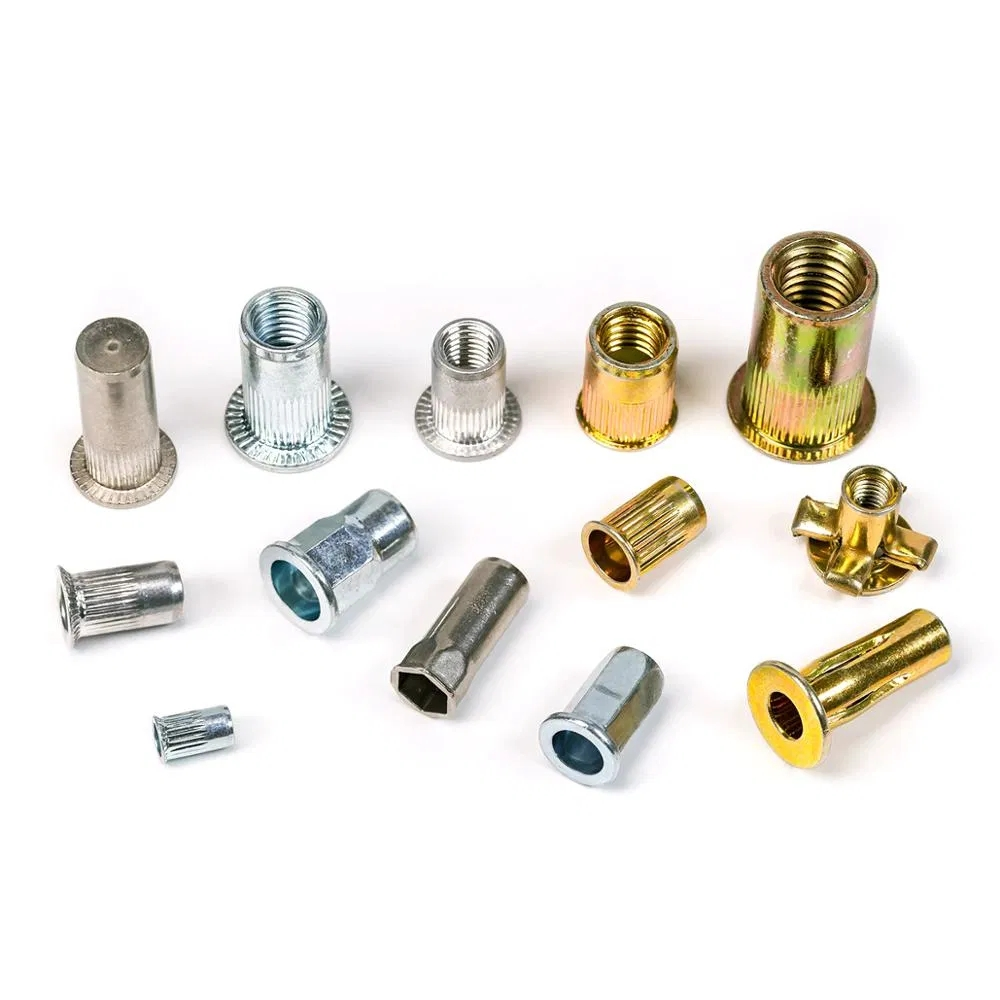
What Is a Rivet Nut and How Does It Work in Steel Furniture Assembly?
Understanding the Basic Mechanism of Rivet Nuts
Rivet nuts, sometimes called threaded inserts, are those handy little fasteners that do double duty by combining both riveting and threading all in one piece. What makes them work so well is their internal threading inside a cylinder shape that fits snugly into holes drilled ahead of time in steel panels when putting together furniture. When someone presses these with a special tool, they actually collapse outward around the edges, creating this kind of hidden lock on just one side of whatever material they're attached to. No need to get behind the panel at all, which is why manufacturers love using them for building closed-off steel furniture frames and those tricky thin parts where space is tight. Just think about how much easier it would be to assemble something without having to reach through every hole!
The Science Behind Blind-Side Locking for One-Sided Installation
What makes this technology stand out is the way compression forms a controlled bulge right behind where the workpiece sits. When the installation tool grabs hold of the fastener's mandrel, something interesting happens to the rivet nut's tail it starts to deform in a plastic way, actually expanding anywhere from 1.5 to 2 times what it was originally. This cold forming technique creates between 300 and 500 Newtons of clamping force on steel sheets that are 0.8 to 3 millimeters thick, resulting in joints that resist vibrations without needing any welding at all. According to a recent report on material fastening from 2023, these rivet nuts install approximately 94 percent quicker compared to standard nut and bolt approaches on factory assembly lines, which explains why so many manufacturers are making the switch nowadays.
Forming Strong Threaded Connections in Steel Furniture Frames
Once installed, the rivet nut provides a reusable M4-M12 threaded channel that withstands up to 6,000 N tensile loads, critical for load-bearing joints in office chairs, shelving units, and modular furniture systems. Unlike welded connections that degrade under repeated stress, rivet nuts distribute forces across four contact points:
- Radial compression against the hole walls (45% of strength)
- Flange pressure on the front surface (30%)
- Thread engagement with mating bolts (20%)
- Material deformation interlock (5%)
This multi-axis reinforcement explains why 78% of industrial furniture manufacturers now prefer rivet nuts over spot welding for steel thicknesses under 2mm.
Blind Installation Advantage: Why Rivet Nuts Excel in Hard-to-Reach Areas
One-Sided Access Benefits for Thin or Enclosed Steel Sections
Rivet nuts tackle a big problem when putting together steel furniture because they let workers fasten things securely even when only one side can be reached. These special fasteners have this locking system on the blind side that works with materials anywhere between half a millimeter up to 12mm thick. That makes them really useful for today's furniture designs that often use those thin steel tubes or cabinets with closed backs. Traditional bolts and screws need access to both sides, but not so with rivet nuts. When installed, these little wonders actually squeeze outwards, forming a kind of mechanical bump that grabs onto whatever surface it's attached to from behind.
Step-by-Step Installation: Drilling, Insertion, and Compression With a Rivet Nut Tool
- Drill a hole matching the rivet nut’s outer diameter (±0.1mm tolerance)
- Insert the rivet nut into the prepped hole
- Compress using a hand or pneumatic tool that simultaneously pulls the mandrel and deforms the sleeve
Proper installation achieves 25–35 N·m torque resistance (Industry Standard FF-STD-1531A), eliminating the need for welding equipment or multi-person bolting teams.
Efficiency Comparison: Rivet Nuts vs. Welding and Traditional Bolting
| Factor | Rivet Nuts | Welding | Bolting |
|---|---|---|---|
| Installation Time | 12-18 sec | 45+ sec | 30+ sec |
| Labor Skill Required | Low | High | Medium |
| Post-Process Finishing | None | Grinding/Painting | None |
A 2023 production line study showed a 63% reduction in assembly time when switching to rivet nuts for steel office chair bases, while maintaining 98.7% joint integrity after 50k cyclic load tests.
Strength and Durability of Rivet Nuts Under Load, Vibration, and Long-Term Use
Pull-out and spin-out resistance in dynamic furniture applications
Rivet nuts keep those threaded connections solid in steel furniture even when it gets moved around a lot. Tests have found that they hold onto about 94 percent of their clamping power after going through 50 thousand vibration cycles according to ASTM F468 from 2025. What makes this work so well is how these nuts expand outward, creating little mechanical locks inside the material. This stops things from rotating or pulling out in stuff like office chairs, those big recliners people love, and all sorts of adjustable shelf systems. And honestly, this matters a ton because we constantly need to rearrange our workspace or deal with changing weight distributions throughout the day.
Shear and tensile strength performance in steel joints
Material selection directly impacts durability:
| Material | Tensile Strength | Shear Strength | Fatigue Life |
|---|---|---|---|
| Carbon Steel | 450 MPa | 400 MPa | 75k cycles |
| Stainless Steel | 520 MPa | 490 MPa | 250k cycles |
| Aluminum | 300 MPa | 150 MPa | 30k cycles |
Stainless steel variants deliver optimal performance for structural joints, sustaining over 25 kN loads without deformation according to ISO 15977 test protocols, equivalent to supporting 2.5 metric tons per connection point.
Industrial fatigue test data and reliability across material thicknesses
Long-term studies reveal consistent performance across gauges:
- 1.5mm steel: 88% clamp force retention after 10 years
- 3.0mm steel: 93% clamp force retention after 10 years
- 6.0mm steel: 97% clamp force retention after 10 years
The Modular Construction Institute's 2025 durability analysis confirms rivet nuts in 2.5mm steel substrates require only 1-2 maintenance interventions per decade compared to 4-5 for welded joints, making them ideal for commercial furniture requiring decades of service life.
Common Types and Materials of Rivet Nuts in Furniture Manufacturing
Hex, Round, Flanged, and Pilot-Hole Rivet Nut Types for Different Assembly Needs
The market offers various rivet nut designs specifically tailored for different furniture assembly needs. When dealing with those tough spots where things tend to twist under pressure, hex body rivet nuts are the go to choice for heavy duty steel frames since they stop unwanted spinning. Round body versions work just fine for everyday jobs on thinner materials though. Flanged models spread out the force over larger areas which helps keep thin metal sheets from warping when building modular pieces. And let's not forget about pilot hole designs that make lining things up much easier when working with already drilled holes. Countersunk rivet nuts remain popular among finish conscious builders because they sit flush with the surface while still maintaining strong connections behind the scenes.
Material Options: Steel, Stainless Steel, and Aluminum – Pros and Cons
| Material | Tensile Strength | Corrosion Resistance | Weight | Best Applications |
|---|---|---|---|---|
| Carbon Steel | 450–550 MPa | Moderate (needs coating) | Heavy-duty | Indoor furniture frames |
| Stainless Steel | 520–700 MPa | High (ASTM A666) | Moderate | Outdoor/humid environments |
| Aluminum | 200–300 MPa | Low (anodizing helps) | Lightweight | Portable or weight-sensitive designs |
Steel dominates structural joints due to cost-effectiveness, while stainless steel handles moisture-prone settings like outdoor furniture. Aluminum cuts weight by 60% compared to steel but requires careful load calculation.
Matching Rivet Nut Materials to Steel Furniture Substrates for Durability
Getting the right materials together stops those annoying galvanic corrosion issues that lead to early failures. When working near saltwater areas, stainless steel rivet nuts paired with powder coated steel last much longer. Aluminum versions are great for light weight frames in modular setups though. Most indoor furniture applications still go with zinc plated steel rivet nuts since they hit that sweet spot between price and performance, following what most manufacturers recommend for material combinations. Don't forget about substrate thickness either. Thicker steel frames need better quality materials to handle all that repeated stress over time without breaking down.
Key Benefits of Rivet Nuts: Speed, Reliability, and Design Flexibility in Production
Fast and consistent installation in high-volume furniture manufacturing
Rivet nuts make it possible to fasten things quickly and reliably on production lines, cutting down installation time by somewhere between 40 and 60 percent when compared to welding or tapping threads manually. When automated equipment is used, each connection takes less than three seconds to complete, and they manage to keep the position accurate within about a tenth of a millimeter. That kind of precision matters a lot when putting together modular components that need to line up just right. The difference in speed really adds up too. Manufacturers can now put together anywhere from 300 to 500 chair bases during a single work shift, whereas before with old fashioned fastening methods, they were lucky to get through 120 to maybe 150 at best.
Labor cost savings and improved efficiency on assembly lines
A 2023 assembly line analysis showed furniture plants using rivet nuts reduced direct labor hours by 18% through:
- Elimination of welding PPE setup (saving 22 minutes/worker/day)
- Removal of post-installation thread-cleaning operations
- 97% first-pass yield versus 84% for manual screw threading
These savings compound in facilities producing 20,000+ units monthly, with one manufacturer reporting $12.50/unit cost reductions after full implementation.
Case study: Rivet nut implementation in a major office furniture production line
When a leading office furniture supplier converted their lateral file cabinet line to rivet nuts, they achieved:
| Metric | Before | After | Improvement |
|---|---|---|---|
| Assembly time/unit | 8.7min | 5.1min | 41% faster |
| Rework rate | 6.2% | 0.9% | 85% reduction |
| Daily output | 340 | 520 | +53% |
The switch also enabled mixed-material assemblies previously impossible with welding, accelerating new product development.
Enabling modular, disassemblable designs and sustainable manufacturing trends
The fact that rivet nuts can be removed and reused fits right into circular manufacturing efforts. A recent survey found that about three quarters of EU furniture manufacturers are now looking for fasteners that make disassembly easier. What's interesting is how these nuts work with different materials. They let companies build products using both steel and aluminum together. This combination cuts down on weight by somewhere between 15% and 30%, yet still keeps things strong enough for everyday use. The lighter products mean less fuel burned during transport, which helps hit those tricky CO2 reduction targets everyone's talking about. And there's something else going on too. Some new versions of these rivet nuts actually contain around 42% recycled material from consumer waste streams. That kind of innovation really pushes forward what many businesses hope to achieve when they talk about sustainable practices.
FAQ
What is a rivet nut?
A rivet nut is a fastener combining both riveting and threading in one piece, ideal for steel furniture assembly.
How does a rivet nut work?
Rivet nuts create a hidden lock through blind-side installation, expanding to form a secure fastening without needing access to both sides of the material.
Why are rivet nuts preferred over welding?
Rivet nuts are faster to install, require lower labor skills, and eliminate the need for post-process finishing compared to welding.
What materials are rivet nuts made from?
Rivet nuts are available in carbon steel, stainless steel, and aluminum, each offering different benefits in terms of strength, corrosion resistance, and weight.
Table of Contents
- What Is a Rivet Nut and How Does It Work in Steel Furniture Assembly?
- Blind Installation Advantage: Why Rivet Nuts Excel in Hard-to-Reach Areas
- Strength and Durability of Rivet Nuts Under Load, Vibration, and Long-Term Use
- Common Types and Materials of Rivet Nuts in Furniture Manufacturing
- Key Benefits of Rivet Nuts: Speed, Reliability, and Design Flexibility in Production
- FAQ