
 EN
EN
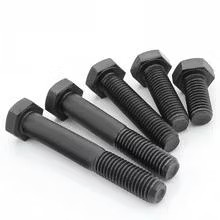
Why High Strength Bolts Are Critical for Industrial Steel Furniture Durability
Rising Demand for Durable Fasteners in Industrial Furniture Applications
Furniture used in industrial settings needs to handle pretty rough treatment including heavy weights, ongoing vibrations, and regular moving around. All these factors put pressure on the joints and connections, which tends to make normal fasteners come loose, bend out of shape, or just break down completely over time. When this happens, there are real safety issues at stake plus expensive delays when operations have to stop while things get fixed. High strength bolts tackle this problem head-on because they maintain that steady grip and keep structures intact even under tough conditions. According to data from the Industrial Safety Journal published last year, their usage jumped about 40 percent in warehouse settings since 2021. Manufacturers now see value in specifying these bolts for important parts such as shelf frameworks and those modular workstations everyone's talking about lately. The move toward stronger fastening solutions not only makes workplaces safer but also means equipment lasts longer without needing constant repairs, something that factory managers appreciate greatly during daily operations throughout manufacturing plants and distribution hubs alike.
Mechanical Properties of High Strength Bolts: Tensile Strength, Yield Strength, and Hardness
Three interdependent mechanical properties define high strength bolt performance:
- Tensile strength (minimum 800 MPa per ISO 898-1) resists pulling forces under heavy static and dynamic loads
- Yield strength ensures the bolt returns to its original shape after stress, preserving joint integrity without permanent deformation
- Hardness (typically 22–32 HRC) provides resistance to thread wear, abrasion, and galling during repeated assembly and vibration
Together, these properties maintain preload over time—even amid thermal cycling and mechanical shock. For instance, ASTM A325 bolts retain 90% of initial preload after 10,000 stress cycles (Fastener Testing Report 2022), a key factor in preventing loosening in industrial steel furniture subjected to dynamic loading.
Material Composition and Industry Standards for High Strength Bolts
Key Standards for High Strength Bolts: ISO 898-1, ASTM A325, and ASTM A490
For high strength bolts to work properly in critical applications, they need to meet international standards that guarantee their performance when it matters most. The ISO 898-1 standard sets out what properties these bolts should have, looking at things like how much force they can handle before breaking (tensile strength), when they start to deform (yield strength), their hardness level, and the maximum load they can take without permanent deformation (proof load). This applies specifically to metric bolts rated at grades 8.8, 10.9, and 12.9. Over in North America, many builders rely on ASTM A325 bolts for connecting structural steel components in warehouses and manufacturing facilities. These bolts have a minimum tensile strength of around 120,000 psi. For situations where extra strength is needed, like mounting heavy industrial equipment, the ASTM A490 bolts step in with an impressive minimum strength of 150,000 psi. Meeting all these specs isn't just paperwork either. Manufacturers actually test the materials thoroughly, check the heat treatments, and measure dimensions precisely so these bolts won't let down workers dealing with tough conditions day after day on factory floors.
Material Selection: Alloy Steel, Carbon Steel, and Stainless Steel in Industrial Applications
What kind of material gets used makes all the difference when it comes to how bolts perform, last over time, and work in different conditions. Alloy steel that's been heat treated gives really good strength and can handle repeated stress, which is why most people go for this option in things like heavy duty storage racks and earthquake rated mounting systems. Carbon steel is cheaper obviously, but needs something extra like galvanized coating or maybe an epoxy layer to stop rust forming especially inside buildings or where there's some mild chemical activity happening. Stainless steel options like grade A2-70 and A4-80 naturally resist corrosion because they contain chromium and nickel, making them great choices for places that get wet a lot, need frequent cleaning, or are around chemicals. The downside? These stainless varieties usually lose about 15 to 20 percent strength compared to similar alloy steels. When picking materials, engineers look at what loads the bolts will carry, what sort of environment they'll face day after day, and how much money will be spent overall during their lifetime rather than focusing solely on initial costs.
Performance Under Stress: Fatigue and Corrosion Resistance of High Strength Bolts
Corrosion Resistance and Protective Surface Treatments for Long-Term Use
Bolts failing early in industrial environments often trace back to corrosion problems, particularly when there's moisture around, plus all those cleaning products, road salt from winter maintenance, or whatever chemicals happen to be part of the manufacturing process. Carbon steel bolts left unprotected might actually lose about half a percent of their thickness every year because of regular corrosion effects. This kind of wear doesn't just happen slowly over time either—it speeds up how cracks start forming under stress and weakens what weight they can safely hold. To really combat these issues, engineers need to look at specially designed surface coatings and treatment methods that stand up against these harsh conditions day after day.
- Hot-dip galvanization: Zinc coatings act as sacrificial anodes, extending service life by 15–20 years in high-humidity environments
- Epoxy and polymer coatings: Provide impermeable, chemical-resistant barriers ideal for food processing or pharmaceutical facilities
- Passivated stainless steel: Leverages natural chromium oxide layers for long-term rust resistance without coating degradation
These treatments not only preserve bolt geometry but also reduce the risk of pitting and crevice corrosion—failure modes that disproportionately compromise fatigue performance under cyclic loading.
Fatigue Life and Toughness in Cyclic Loading Environments
Fatigue resistance determines how long a bolt remains functional under repeated stress—critical in applications involving vibrating equipment, automated material handling, or seismic activity. High strength bolts achieve extended fatigue life through three key design and manufacturing factors:
- Balanced toughness-to-strength ratio: Enables energy absorption during impact, delaying crack nucleation and propagation
- Favorable S-N curve behavior: Premium-grade bolts withstand over 2 million cycles at 50% of ultimate tensile strength
- Rolled (not cut) threads: Reduce stress concentration at root fillets by up to 25%, significantly improving fatigue endurance
Crucially, corrosion and fatigue interact synergistically: in combined environments, bolt lifespan can decline by 40–60% versus either stressor alone. That’s why surface protection isn’t optional—it’s integral to sustaining fatigue performance over time.
Real-World Application: High Strength Bolts in Heavy-Duty Steel Shelving Systems
Case Study: Structural Performance of ASTM A325 Bolts in Industrial Storage Frameworks
Industrial storage systems often handle weights well above 5,000 pounds on each shelf level, putting serious stress on all those little bolts and fasteners. They have to deal with constant tension forces, sideways pressure from shifting loads, plus all sorts of vibrations that slowly wear things down over time. That's where ASTM A325 bolts really shine. These bad boys are rated for at least 120,000 psi tensile strength, and their carefully balanced yield-to-tensile ratio keeps them from snapping unexpectedly when pushed too far. Take one real-world example at a regional warehouse operation. For two whole years straight, hot-dipped galvanized A325 bolts held up against nonstop pallet traffic, frequent rack reconfigurations, and changing humidity levels through different seasons. What made it work? Getting the installation torque just right so the bolts were properly preloaded, combined with that protective zinc coating that fights rust. Both aspects were checked thoroughly when setting up the system and then monitored regularly after that. Looking at actual incidents reported in the Industrial Safety Report from last year shows why this matters so much. When racking systems fail catastrophically, companies typically face losses running into half a million dollars or more from damaged goods, repair costs, and potential worker injuries. So next time someone says bolt specs don't matter much, remember this: choosing the right bolts isn't just about following standards. It affects everything from daily operations to long-term expenses in any facility that moves materials around.
FAQ Section
What makes high strength bolts essential for industrial furniture?
High strength bolts are vital for industrial furniture because they resist heavy weights, vibrations, and dynamic loads, ensuring the stability and safety of the furniture.
What mechanical properties do high strength bolts have?
High strength bolts are defined by their tensile strength, yield strength, and hardness, all of which contribute to their ability to handle significant stress without deforming or breaking.
How are high strength bolts tested for quality?
Manufacturers test high strength bolts' materials, heat treatments, and dimensions to ensure they meet standards like ISO 898-1, ASTM A325, and ASTM A490.
What materials are commonly used for high strength bolts?
Common materials for high strength bolts include alloy steel, carbon steel, and stainless steel, each chosen for specific performance requirements and environmental conditions.
How do surface treatments affect bolt lifespan?
Surface treatments like galvanization, epoxy coatings, and passivation help protect bolts from corrosion, extending their lifespan and maintaining their performance.
Table of Contents
- Why High Strength Bolts Are Critical for Industrial Steel Furniture Durability
- Material Composition and Industry Standards for High Strength Bolts
- Performance Under Stress: Fatigue and Corrosion Resistance of High Strength Bolts
- Real-World Application: High Strength Bolts in Heavy-Duty Steel Shelving Systems
- FAQ Section