
 EN
EN
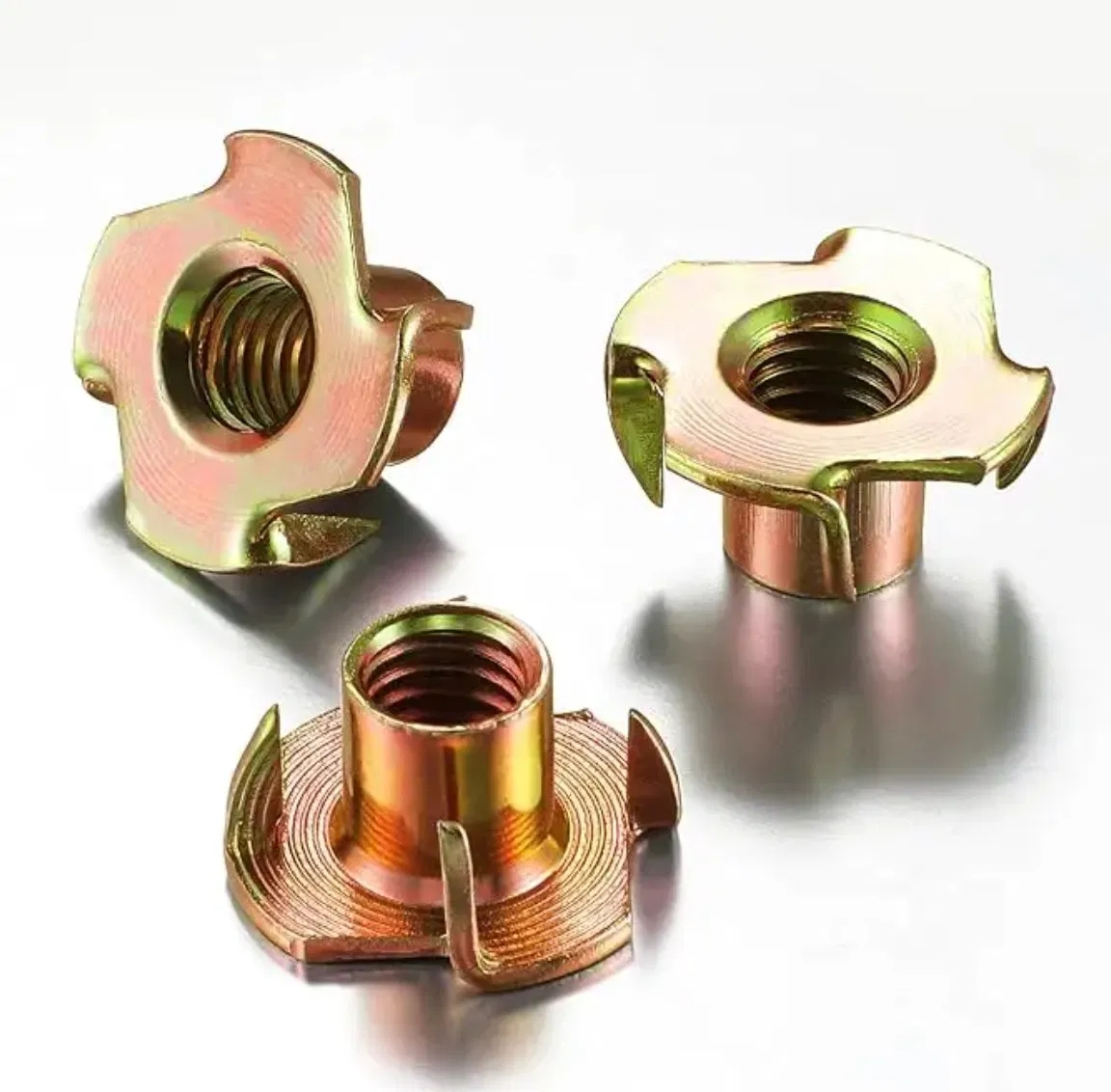
Fourclaw Nut Design: Optimized Geometry for Steel-Specific Grip
Four-Prong Symmetry and Its Role in Uniform Load Distribution Across Thin-Gauge Steel
A symmetrical four prong design works really well because it spreads out the forces evenly when these fasteners go into steel. The balance helps distribute whatever load is being placed on them across all those contact points without any one spot taking too much stress. For thinner steel sheets around or below 1.2 millimeters thick, this kind of symmetry actually stops things from bending or warping since there's only about 15 percent difference at most between how hard each prong pushes against the metal surface. Tests using computer modeling show that compared to three prong designs, four prongs spread stress across the material about 40 percent better. That makes a big difference for stuff like furniture joints where pieces might get moved around or bumped frequently during normal use. Plus, the way these prongs line up radially helps work around little flaws in the steel itself. Even if the sheet metal wasn't perfectly made, the fastener still pulls through consistently no matter which way the grain runs in the metal.
Material Selection and Surface Hardness: Enabling Reliable Prong Embedding Without Cracking
Steel grades between 1045 and 1050 with a hardness rating of about 45 to 50 HRC work best for embedding prongs into steel furniture frames. These materials strike a good balance where the prongs can actually bite into the metal without snapping off, yet still hold up when twisted or stressed. When properly heat treated, these prongs bend just enough during installation to create those little mechanical locks that stop them from pulling out later. Some manufacturers have started adding tiny serrations along the edges of their prongs too. These small grooves boost the contact area against the frame by roughly 30 percent compared to plain smooth ones, which means more grip without needing to hammer them in so hard. The result? Fewer cracks appear in those powder coat finishes we all love, something that happens quite often with cheaper fasteners made from inferior materials.
Superior Pull-Out Resistance: Quantifying Fourclaw Nut Performance in Steel Applications
ASTM F1554 Test Results: 42% Higher Pull-Out Strength vs. Standard Tee Nuts
Testing according to ASTM F1554 standards reveals that four claw nuts offer around 42% better pull out resistance compared to regular tee nuts when used with steel materials. The reason? Their unique multi point anchoring design makes all the difference. When subjected to vertical loads over 1,800 pounds in 16 gauge steel, these special nuts held up just fine while standard tee nuts started failing around the 1,260 pound mark. What really matters is how well they handle repeated stress without stripping threads something that becomes super important for furniture connections that need constant readjustment during assembly. The real world strength boost translates into safer installations for things like heavy duty shelves and structural framing where reliability counts most.
Stress Distribution Analysis: Why Fourclaw Nuts Reduce Edge Deformation in Sheet Metal
Fourclaw nuts help reduce distortion in sheet metal by spreading out the load better than traditional fasteners, something confirmed through computer modeling tests. These nuts have four evenly spaced arms instead of just one contact point, which means they spread tension over roughly 40 percent more surface area than regular tee nuts do. This actually cuts down on the pressure buildup around holes by almost two thirds, making those annoying dimples much less likely to form in thin steel sheets. When working with delicate materials, this matters a lot because it changes those concentrated stress points into something the metal can handle without warping. The end result? Metal panels stay flatter for longer even when forces come from odd angles. This makes all the difference in quality furniture pieces where metal parts are visible since any bending or twisting would ruin both how it looks and works properly.
Efficient, Repeatable Installation of Fourclaw Nuts in High-Volume Steel Furniture Production
Two-Step Process: Precision Pre-Drill Alignment and Low-Force Hammer/Press Engagement
The installation process works best with a simple two part approach that's become standard in mass producing steel furniture. Step one involves placing the nut correctly with help from a special jig that lines up perfectly with those pre-drilled holes we mentioned earlier. This keeps everything aligned properly so nothing gets twisted out of place. For step two, just give those prongs a gentle tap either with a regular hammer or one of those air powered presses. The force needed is surprisingly light but enough to get them seated without damaging the thin metal sheets. What makes this method so good? Well, it completely skips the whole threading hassle which cuts down on labor costs around 30 percent compared to older methods. Plus, every single unit ends up sitting at exactly the same depth each time. And because of how the nut is shaped, there's instant grip strength right away. Factories report being able to put together over 500 pieces per hour with almost no issues related to threads getting crossed during assembly.
Real-World Reliability: Fourclaw Nuts in Multi-Material Steel Furniture Joints
Cyclic Loading Performance in Hybrid Assemblies (Steel-to-MDF and Steel-to-Plywood)
When building furniture that combines steel frames with materials like MDF or plywood, four claw nuts really shine when subjected to repeated stress over time. What makes them special? The claws dig into the steel while also gripping the softer wood surfaces, spreading out the forces across the joint instead of just depending on threads alone. Lab tests have found that these connections keep about 97 or 98 percent of their holding power even after going through thousands of stretching and squeezing motions. This helps prevent those annoying cracks that form around wood panels and stops the metal parts from getting tired and breaking down. Real world testing backs this up too, showing that furniture assembled with four claw nuts can handle well over 50 thousand loading cycles before showing any signs of wear. That's roughly twice as long lasting as traditional methods that rely on rivets combined with glue for joining different materials together.
FAQ Section
What is the main advantage of a four-prong symmetrical design in nuts?
The four-prong symmetrical design distributes forces evenly across contact points, reducing stress concentration and preventing bending or warping in thin-gauge steel.
How do tiny serrations on prongs improve grip?
Tiny serrations increase the contact area against the frame by roughly 30%, enhancing grip without the need for excessive force during installation.
What makes fourclaw nuts superior to standard tee nuts?
Fourclaw nuts boast a unique multi-point anchoring design, offering approximately 42% better pull-out resistance than standard tee nuts, making them ideal for steel applications.
Why is a two-step installation process beneficial in high-volume production?
The precision pre-drill alignment followed by low-force tap engagement streamlines installation, reducing labor costs by 30% and ensuring consistent unit depth.
How do fourclaw nuts perform in multi-material joints?
They excel in hybrid assemblies, maintaining 97-98% holding power through thousands of cycles, making them reliable for steel-to-MDF and steel-to-plywood connections.
Table of Contents
- Fourclaw Nut Design: Optimized Geometry for Steel-Specific Grip
- Superior Pull-Out Resistance: Quantifying Fourclaw Nut Performance in Steel Applications
- Efficient, Repeatable Installation of Fourclaw Nuts in High-Volume Steel Furniture Production
- Real-World Reliability: Fourclaw Nuts in Multi-Material Steel Furniture Joints
-
FAQ Section
- What is the main advantage of a four-prong symmetrical design in nuts?
- How do tiny serrations on prongs improve grip?
- What makes fourclaw nuts superior to standard tee nuts?
- Why is a two-step installation process beneficial in high-volume production?
- How do fourclaw nuts perform in multi-material joints?