
 EN
EN
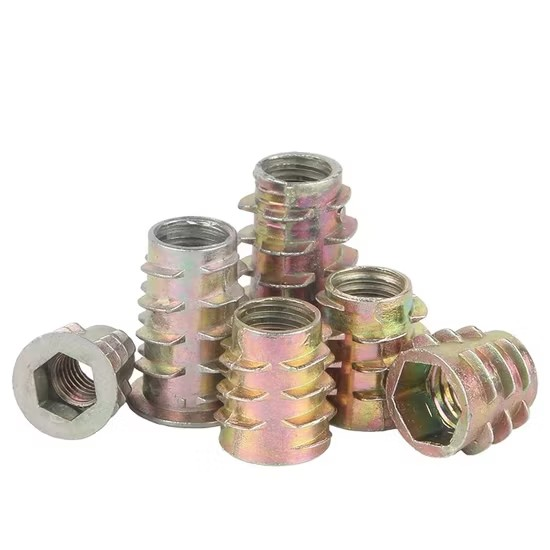
Insert Nuts Provide Reliable Threaded Fastening in Thin-Gauge Steel Safe Enclosures
Insert nuts deliver robust threaded anchoring in steel security containers where thin materials (sub-1.2mm) or hardened alloys challenge conventional fasteners. Their radial-load distribution prevents thread stripping during security-critical events while enabling simplified manufacturing.
Why Standard Tapping Fails in Hardened or Sub-1.2mm Steel Walls
Standard thread cutting just doesn't cut it when working with thin or hardened steel materials. When tapping these materials, stress builds up in certain spots which can start tiny cracks forming in sheet metal thinner than 1.2mm. Hardened steel is especially problematic because it wears down taps much faster and often causes them to break during machining operations. Most taps create threads that are only about 0.6mm deep or less in thin panels, which isn't really enough grip for what most applications need. According to tests run across the industry, threads made by tapping in hardened steel actually hold up about 30 percent worse under shear forces compared to using insert nuts. This means components might not stand up as well when subjected to impacts or sudden stresses in real world conditions.
How Insert Nuts Distribute Load and Resist Pull-Out Under Security-Critical Loads
Insert nuts tackle the problem of thread stripping by using radial compression mechanics. Once these nuts are put in place, the flanged base actually expands against the enclosure walls. This creates what engineers call an interference fit, spreading out forces over about three times the surface area compared to regular tapped threads. The way these nuts work is pretty clever too. They take the straight line tension force and turn it into circular compressive stress around the nut. This makes them really good at resisting attempts at forced entry where someone might try to pry things apart. Testing has shown that these special nuts can handle pull-out forces about 90 percent better than standard tapped threads when working with 1.0mm hardened steel. Plus, because they don't rely solely on the threads themselves, they keep holding tight even when there's vibration going on. This meets those important ISO 16147 security requirements that many industries need to follow for proper installation safety.
Blind-Threaded Insert Nuts Enable One-Sided Assembly in Fully Enclosed Safe Cabinets
Overcoming Inaccessible Backside Surfaces in Welded Safe Structures
When building welded safety structures, manufacturers end up creating cabinets that are completely sealed shut once put together. The inside surfaces just can't be reached after everything gets assembled. Regular fastening methods such as bolts or those little weld nuts won't work here because they need access to the back side something that simply isn't available in these tight, closed off spaces. That's where insert nuts come into play. These special components allow workers to install them without needing access to both sides of the cabinet. Technicians can attach hinges, locks, and various internal supports right from the front panel alone. No more expensive redesigns of entire units or weakening welds to get at hard spots. Factory productivity jumps quite a bit too when assembly crews don't have to deal with complicated take-apart procedures or hunt down specialty tools meant for cramped working areas.
Anchoring Mechanics of Rivet-Nut and Sert-Type Insert Nuts
Insert nuts with blind threading stay put thanks to either expansion or compression along their radius. For rivet nuts specifically, there's this little rod called a mandrel that pushes out the sleeve against whatever surface sits behind it, basically locking everything together mechanically. Then we have those Sert type versions which feature these textured collars that get squeezed into drilled holes when pressure is applied, creating what engineers call an interference fit. What makes all these options better than regular tapped threads? They spread out the clamping force over a much larger area, so they won't just pop out even during intense situations like someone trying to force open a door. These anchors can handle shear stress exceeding 2000 pounds per square inch on steel thinner than 1.2mm, something absolutely essential for hinge systems supporting heavy safe doors. Getting them installed correctly matters too since proper technique maintains consistent torque levels while avoiding damage to delicate sheet metal surfaces.
Insert Nuts Enhance Vibration and Impact Resistance for Long-Term Joint Integrity
Preventing Thread Loosening During Transport, Installation, or Forced Entry Attempts
Insert nuts help prevent those annoying thread issues in steel safes by fighting off vibration problems. The way they're designed creates an interference fit that actually soaks up vibrational energy when someone handles or drops the safe, keeping everything clamped down tight where regular bolts would just give up. Testing shows these special security versions cut down on bolt back-out during break-in attempts by around three quarters compared to standard tapped threads. What makes them work so well is this radial compression effect against the surrounding metal, absorbing shocks while still holding up the overall structure of the safe.
Interference Fit and Radial Compression: ISO 16147 Compliance in High-Security Applications
Insert nuts certified under ISO 16147 get their reliability from something called controlled radial expansion. When these nuts are compressed during installation, they create what engineers call uniform hoop stress all around the hole where they're placed. This helps spread out the forces acting on the nut so the load isn't just concentrated in one spot on the steel base material. For thinner safes, those below 1.2mm thickness specifically, this design really matters because it stops those pesky stress points that lead to cracks forming over time. To meet certification standards, manufacturers have to run their products through rigorous cyclic vibration testing that basically mimics what happens after many years of actual use. These tests prove why these nuts work so well in places like bank vaults and other secure storage facilities where even the slightest joint failure would be totally unacceptable for security reasons.
Precision Installation Methods for Insert Nuts in Rigid or Thin Steel Safe Components
Mitigating Cracking and Deformation in Cold-Rolled Steel <1.2mm
Steel panels thinner than 1.2mm tend to warp or crack when installing insert nuts, which can be a real headache for production teams. To avoid such issues, getting the hole right matters a lot. Drilling needs to hit that sweet spot in diameter, usually within about 0.05mm either way, while making sure edges are clean and free from burrs helps prevent stress buildup. Choosing the right type of insert nut makes a difference too. Options like aluminum inserts or those made from thin walled stainless steel create less outward force during installation because they expand less radially. When dealing with parts where security is paramount, combining progressive die punching techniques with proper annealing treatment works wonders. This process forms a heat treated area around each hole that boosts the material's flexibility by roughly 25% according to ASTM standards, allowing it to handle installation stresses without distorting shape.
From Manual Riveting to CNC-Controlled Press-Fitting for Repeatable Torque Performance
Manual rivet nut tools might be cheaper for those building custom safes, but they come with problems. The pull-up force varies quite a bit, and alignment issues are common. We've seen torque retention fluctuate by over 30% during destructive tests, which is pretty significant. On the other hand, CNC controlled press fitting systems have changed the game. These machines use servo driven mandrels along with optical positioning tech to get things installed at exactly 90 degrees every time. They maintain compression forces within about plus or minus 2%, something manual methods just can't match. What makes these systems so reliable? Well, they take away all the guesswork from operators who might accidentally mess up the process. Clamp loads stay consistent enough to pass ISO 16147 standards for security hardware installations. And here's another perk: advanced models actually record installation data in real time. Each fastener gets its own force versus displacement curve documented. This creates detailed quality records that matter a lot when protecting valuable assets where documentation requirements are strict.
FAQ
What are insert nuts?
Insert nuts are special hardware components designed to provide reliable threaded fastening in thin or hardened steel materials, particularly when traditional fasteners are inadequate.
Why are insert nuts used in thin-gauge steel enclosures?
Insert nuts are used because they distribute the load and prevent thread stripping, which is common in thin or hardened steel materials especially during security-critical events.
How do insert nuts differ from standard tapping?
Insert nuts offer better load distribution and resist pull-out and shear forces significantly better than standard tapped threads, particularly in thin or hardened steels.
What is ISO 16147, and why is it important?
ISO 16147 is a security standard that tests the resilience and reliability of fasteners in high-security applications. Insert nuts meet these standards by offering controlled radial expansion and hoop stress distribution.
Table of Contents
- Insert Nuts Provide Reliable Threaded Fastening in Thin-Gauge Steel Safe Enclosures
- Blind-Threaded Insert Nuts Enable One-Sided Assembly in Fully Enclosed Safe Cabinets
- Insert Nuts Enhance Vibration and Impact Resistance for Long-Term Joint Integrity
- Precision Installation Methods for Insert Nuts in Rigid or Thin Steel Safe Components
- FAQ