
 EN
EN
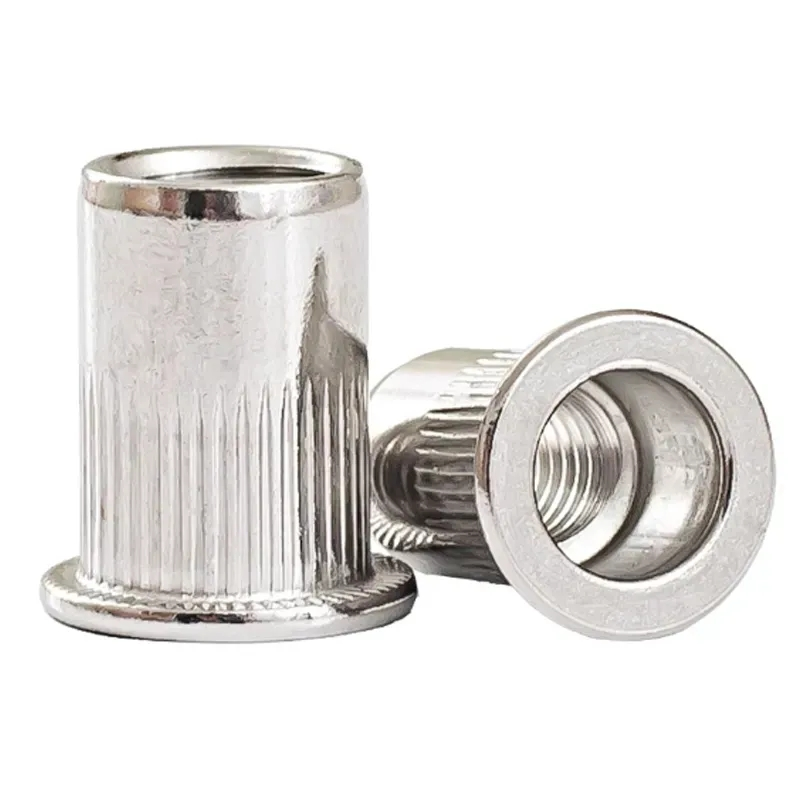
Superior Mechanical Anchoring: How the Knurled Body Delivers Pull-Out Resistance
Radial Expansion Under Torque: The Core Installation Mechanism
When installing flat head knurled body rivet nuts, applying torque causes the nut to expand outward. As this happens, the knurled part pushes against the inside of whatever material it's being installed into, creating pressure that holds everything together firmly. What we get from this process is basically a tight fit that turns the spinning motion into something permanent. Tests show these kinds of nuts can resist pulling out about 50 percent better than regular smooth ones. They work really well in thinner materials between roughly 0.8mm and 5mm thick, which is where standard fasteners tend to give trouble. These special nuts stop them from spinning loose when there's vibration around, and they spread out the stress across the material instead of concentrating it all in one spot.
Knurl Geometry & Material Deformation: Engineering Grip per ASTM F2309
The anti rotation properties come from those special knurl patterns designed specifically to meet and beat the ASTM F2309 requirements for threaded inserts. Most often we see diamond shaped knurls because they work so well at creating that multidirectional grip. When these patterns are pressed into place, they actually push the base material into those spaces between the raised areas. What happens next is pretty interesting too. This cold forming method boosts surface friction somewhere around 30% or maybe even more, and creates those little mechanical locks that stop things from twisting out or pulling loose under stress. There are several important shape related elements to consider here though.
- Knurl depth-to-pitch ratio: Deeper grooves maximize material displacement in softer alloys
- Helical angle: 45° patterns balance axial and rotational resistance
- Land width: Narrow bearing surfaces increase localized pressure for rapid deformation
Material selection further optimizes grip: aluminum knurls deform plastically to fill voids, while steel variants maintain ridge integrity to cut into composites. This engineered surface topography transforms the fastener–host interface from friction-dependent to mechanically interlocked.
Low-Profile Integration: Functional Benefits of the Flat Head Design
Flush Mounting for Aesthetics, Aerodynamics, and Space-Constrained Assemblies
Flat head designs make it possible to integrate components smoothly into surfaces across different sectors. When we look at things like consumer electronics or architecture, these flush mounted rivet nuts get rid of those annoying bumps that stick out, giving products a cleaner look overall. The automotive and aerospace industries really benefit from this too since they need to cut down on air resistance. A single sticking out fastener head can actually create around 15% more turbulence when something moves at high speeds. This becomes especially important in places where there's limited room, such as inside robots or medical equipment. The low profile lets parts stack together without taking up extra space. Plus, it stops components from getting caught on each other during movement, which makes everything work safer in practice.
Optimized Load Distribution via Head Angle and Bearing Surface Ratio
Flat head rivet nuts actually handle stress better than those rounded dome versions most folks use. The angle on these flat heads ranges from around 82 to 100 degrees, which forms kind of a cone shape where it sits against whatever surface it's fastening. When paired with the textured body that grabs onto materials so well, we see point loading drop by roughly 40 percent compared to regular designs. What makes them stand out is this bigger contact area ratio too – usually about 2.5 to 1 instead of just 1.8 to 1 for dome heads. This means stress gets spread out over more space, keeping things from warping when working with thinner materials like aircraft grade aluminum or carbon fiber stuff commonly found in high performance applications. Testing has shown these improved load distributions can make joints last about 30% longer before showing signs of wear, especially important in places where vibrations are constant, like inside big industrial machines running non stop day after day.
Open vs. Closed End Configurations: Performance Trade-Offs for Specific Use Cases
Thread Accessibility vs. Environmental Sealing: Selecting the Right Variant
The open end flat head knurled body rivet nuts give full access to those threads so longer bolts can be used, which makes these nuts great when parts need changing often during maintenance. But there's a downside too. Those open ends let stuff get inside the threads, like dirt or water getting in over time. The closed end versions solve this by cutting down on how deep the threads go to make a tight seal instead. This stops fluids from leaking in and keeps out particles in places where that matters most. When picking between open and closed ends, engineers basically have to decide what they need more access or protection. Open ones work well in things like electronic boxes that people open regularly for checks. Closed ends tend to show up more in boat parts that face saltwater all the time. And if someone wants extra protection against rust, stainless steel options definitely help in those sealed setups.
Closed-End Design Advantages: Debris Exclusion and Fluid-Tight Integrity
Closed end rivet nuts have that sealed end which really matters when there's risk of dirt getting inside. These nuts stop dust and debris from sneaking into those tiny threads found in factory equipment and car parts. They also keep things watertight even when pressure changes happen around them, so no oil or fluids leak out of hydraulic systems or other pressurized areas. Some tests indicate that these sealed versions block about 30 percent more particles compared to regular open ones, especially important in places with lots of shaking and movement. The textured surface on the nut body grabs hold nicely on its own without relying on that seal, making them work well in sensitive spots like airplane components or hospital instruments where keeping everything clean is absolutely necessary.
Industry-Specific Applications of Flat Head Knurled Body Rivet Nuts
Flat head knurled body rivet nuts have become essential for many industries that need dependable fastening from one side only. Automotive makers love these because they attach panels quickly and efficiently. Plus, the flat head sits flush against surfaces which helps reduce wind resistance and stops things from getting caught inside car cabins. For industrial machines, these nuts stand up well to pulling forces so important parts stay put even on equipment that vibrates constantly during operation. Electricians working on control panels appreciate how the knurled surface stops rotation issues when installing switches and other gear that faces ongoing mechanical stress day after day. Farmers and agricultural equipment builders find these particularly useful too since the textured surface grips tightly onto old sheet metal structures exposed to rain, dust, and all sorts of rough conditions out in the fields.
FAQs
What are the primary benefits of using knurled body rivet nuts?
Knurled body rivet nuts provide better pull-out resistance and improve stress distribution across the fastened material. They prevent loosening from vibrations and are ideal for thin materials.
Why choose flat head rivet nuts over other types?
Flat head rivet nuts offer aesthetic benefits by allowing flush mounting and provide better aerodynamics due to reduced protrusion, which is essential in automotive and aerospace industries.
How do the open and closed end rivet nuts differ?
Open end rivet nuts provide easy access for longer bolts, whereas closed end versions offer better environmental sealing by keeping out debris and fluids.
In which industries are flat head knurled body rivet nuts commonly used?
These nuts are used across various industries including automotive, aerospace, industrial machinery, electronics, and agriculture due to their reliability in fastening components securely from one side.
Table of Contents
- Superior Mechanical Anchoring: How the Knurled Body Delivers Pull-Out Resistance
- Low-Profile Integration: Functional Benefits of the Flat Head Design
- Open vs. Closed End Configurations: Performance Trade-Offs for Specific Use Cases
- Industry-Specific Applications of Flat Head Knurled Body Rivet Nuts
- FAQs