
 EN
EN
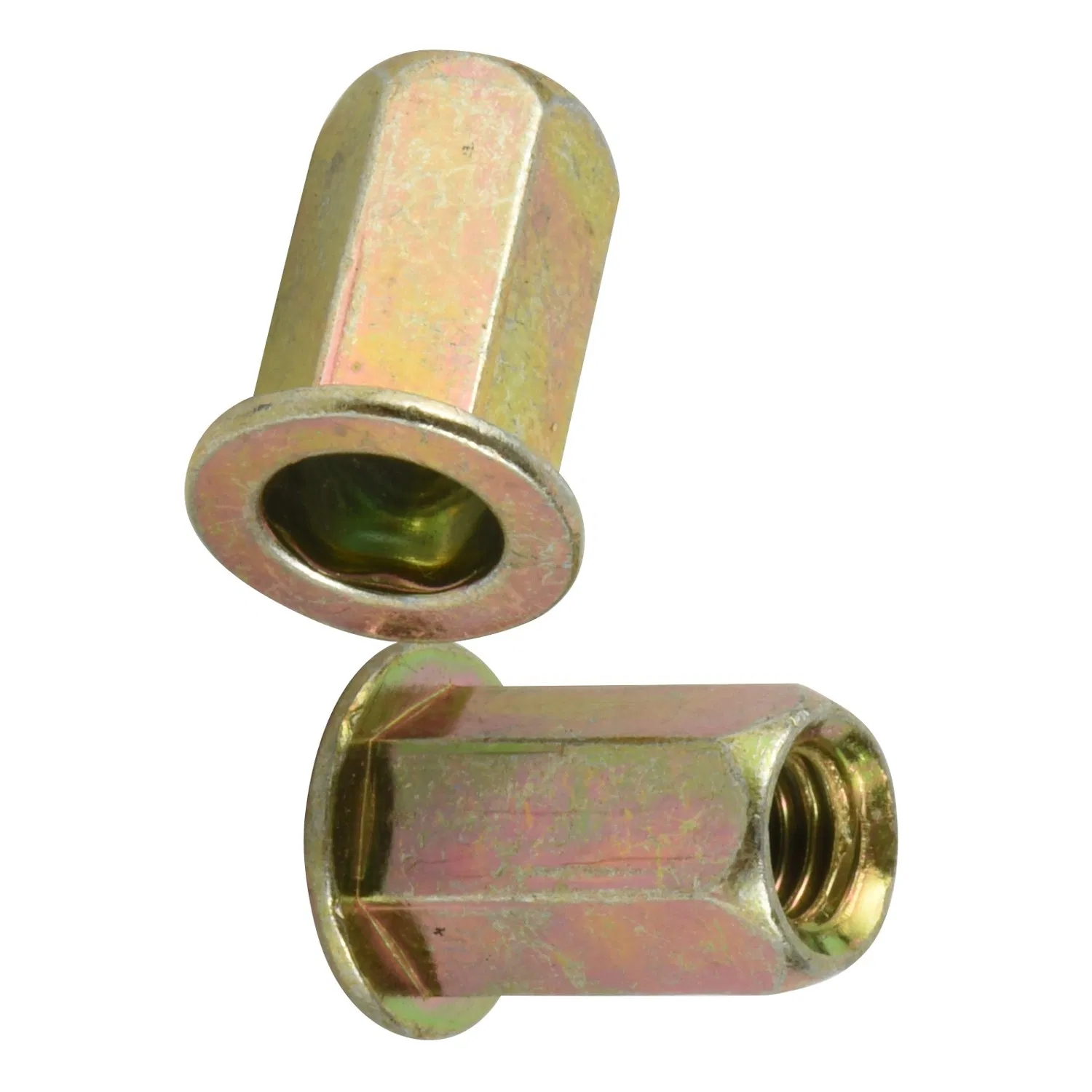
Enhanced Torque Resistance and Mechanical Locking Performance
The flat head full hex body rivet nut fundamentally transforms load distribution in thin-sheet assemblies through its geometric design.
How Hex Body Geometry Optimizes Torque Transfer in Thin-Sheet Applications
The hex shape of these fasteners gives them six points touching the surrounding material, which stops them from spinning around like round screws often do. What happens next is pretty interesting mechanically speaking the force gets spread out over several areas instead of all sitting right on those threads where most stress usually builds up. When working with really thin stuff, say anything below 1mm thick in aluminum or composite materials, this design keeps things from getting bent out of shape locally. Tests show it holds onto about 98% of its initial tightness even after lots of back and forth movement from vibrations. That makes a big difference in places like airplane cabins or electronic housing components where keeping materials intact matters a lot for safety reasons.
Empirical Validation: 32% Higher Breakaway Torque vs. Round-Body Rivet Nuts (ASTM F2304)
Testing shows there's a clear difference in performance between these fasteners. Flat head full hex body rivet nuts can handle about 32% more breakaway torque than their round body counterparts. We're talking around 28 Nm for 0.8mm 5052-H32 aluminum under ASTM F2304 vibration tests. The increased torque resistance means less frequent maintenance for parts that move around a lot. Industry data backs this up too. Real world case studies indicate transportation equipment using these fasteners experiences roughly 40% fewer problems with fasteners failing during regular operation over five years of service. Makes sense why manufacturers are starting to switch to them.
Superior Anti-Rotation Stability in Dynamic Assemblies
The hex body geometry interlocks with the host material during installation—creating six stable points of contact that prevent rotation under vibration. Unlike round-body designs, flat head full hex body rivet nuts deliver true mechanical locking, eliminating spin-out failures in high-stress assemblies like automotive frames or aerospace structures.
Mechanical Interlock Mechanism: Hex Engagement Prevents Spin-Out Under Vibration
Edge engagement anchors the fastener directly into sheet metal; side-load forces distribute across the hex faces instead of concentrating on threads. Testing shows three times higher vibration resistance than traditional rivet nuts—addressing critical loosening issues in industrial robotics and engine compartments.
Real-World Validation: 97% Reduction in Post-Installation Rotation (Ford APQP, 2023)
Automotive OEMs validated performance in suspension systems and powertrain mounts. Under 50Hz vibration cycles, round-body nuts showed consistent rotation within 150 hours. In contrast, flat head hex variants maintained torque alignment for 2,000+ hours—meeting Ford’s APQP durability protocols for critical components.
Flush Mounting Precision and Seamless Aesthetic Integration
Zero-Protrusion Design for Painted, Anodized, and High-Gloss Surfaces
The flat head full hex body rivet nut achieves true flush integration: its countersunk head sits perfectly level with surrounding materials, eliminating surface interference that damages coatings. Installation requires no post-forming surface prep.
The zero-protrusion design prevents:
- Paint chipping during assembly or maintenance
- Light-scattering imperfections on reflective surfaces
- Snag hazards in high-traffic areas
Non-marring installation preserves coating integrity on delicate finishes—critical for automotive interiors, consumer electronics, and architectural metals. Smooth transitions eliminate dirt traps and cleaning challenges, supporting visual continuity in premium applications.
| Surface Type | Benefit | Avoided Defect |
|---|---|---|
| Painted | Scratch resistance | Fisheye marks |
| Anodized | Uniform reflectivity | Galling marks |
| High-Gloss | Distortion-free reflection | Light diffraction |
Strategic OEM Adoption Trends: Why Flat Head Full Hex Body Rivet Nut Is Gaining Market Share
EV Battery Enclosures and Structural Lightweighting: Drivers of Flat Head Full Hex Body Rivet Nut Demand
The shift toward electric vehicles and efforts to make cars lighter are pushing car manufacturers to adopt new technologies faster than ever before. When it comes to battery enclosures, where things get really tricky because of all the vibrations and need for electrical protection, these special fasteners do something important they stop terminals from coming loose even when exposed to high voltages. And here's another plus point their flat mounting design means nothing sticks out, so there's no risk of damaging those delicate battery seals that keep everything watertight inside the enclosure.
In the automotive industry, lightweighting efforts with thin aluminum and composite materials require fasteners that can spread load effectively without making things heavier. Take the hex body design for instance it creates a mechanical lock that holds about 32 percent more clamp force on those 0.8mm thick sheets than regular round body fasteners do. That makes all the difference when building parts where every gram counts, such as reinforcing car frames or securing battery components in electric vehicles. Because of this unique strength profile combined with their compact size, these flat head hex body rivet nuts have become must-have components for manufacturers working on future vehicle designs that need both durability and reduced weight.
FAQ
What is the main advantage of a flat head full hex body rivet nut?
The flat head full hex body rivet nut optimizes torque transfer and distributes load effectively in thin-sheet applications, resulting in superior torque resistance and mechanical locking.
How does the hex body geometry improve performance?
The hex geometry provides six points of contact, preventing rotation under vibration and ensuring a stronger mechanical lock than traditional fasteners.
Why is the zero-protrusion design significant?
The zero-protrusion design ensures seamless aesthetic integration and prevents damage to coatings, making it ideal for applications requiring high finish quality.
What industries benefit from using these fasteners?
Industries like automotive, aerospace, and consumer electronics benefit from these fasteners due to their enhanced performance in challenging environments and vibration-prone assemblies.