
 EN
EN
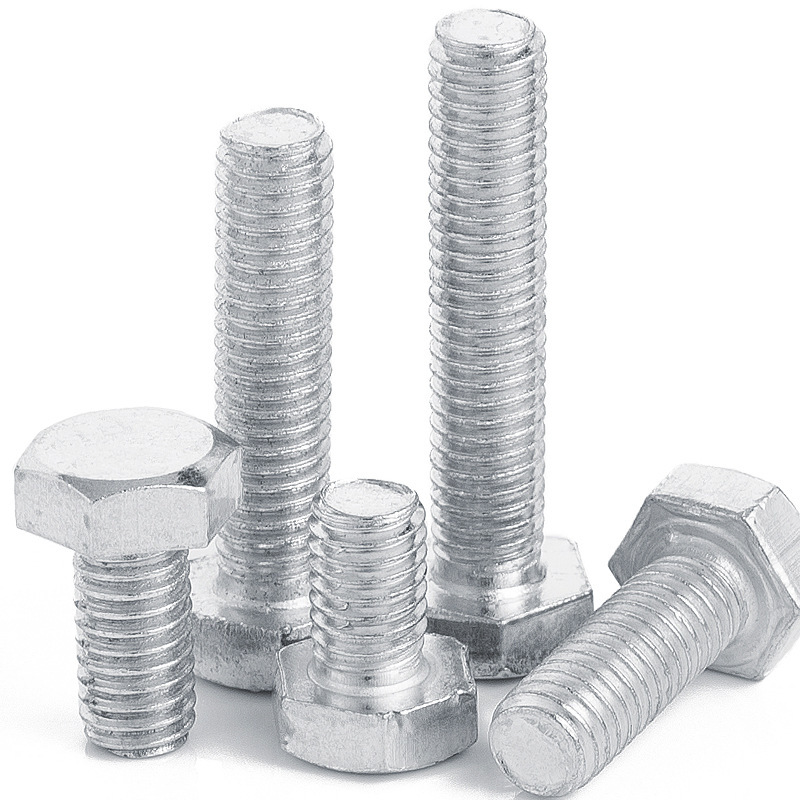
Incorrect Nuts and Bolts Selection: Grade, Material, and Thread Compatibility
Mismatched Strength Grades Leading to Joint Failure
Using mismatched strength grades between nuts and bolts creates dangerous joint failures. A high-grade bolt paired with a lower-grade nut risks thread stripping in the nut—reducing clamping force by up to 70% under extreme load. Conversely, pairing a low-strength bolt with an oversized or over-spec nut masks underlying weakness, often resulting in sudden bolt shaft fracture. Always match specification markings: Grade 8 bolts require Grade 8 nuts; ISO 10.9 bolts demand ISO 10 nuts or higher. This alignment ensures uniform stress distribution across threaded surfaces during vibration, shock, or thermal cycling.
Material Incompatibility and Galvanic Corrosion Risks
Dissimilar metals accelerate galvanic corrosion—especially in humid, marine, or chemically aggressive environments. Carbon steel bolts combined with stainless steel nuts create an electrochemical cell where carbon steel corrodes three times faster than when paired with compatible fasteners. Marine and offshore applications require full-system compatibility: either A4 (316 stainless) throughout or engineered corrosion-resistant alloys. Avoid aluminium/copper combinations entirely unless non-conductive washers fully isolate the metals—otherwise, accelerated pitting and joint degradation are inevitable.
Thread Type Confusion: Metric vs. UNC/UNF and Cross-Threading Hazards
Metric and imperial threads are not interchangeable—even when nominal sizes appear identical. An M8 bolt (1.25 mm pitch) is incompatible with 5/16"-24 UNC (1.058 mm pitch), and subtle pitch mismatches cause cross-threading that fractures thread roots under tension. Fine-thread variants like UNF offer up to 30% greater shear strength but demand exact nut matching. Always verify thread type and pitch using calibrated thread gauges before installation. For high-vibration environments, self-locking thread forms—such as serrated flange nuts or nylon-insert locknuts—provide reliable retention without sacrificing tensile integrity.
Improper Torque Application with Nuts and Bolts
Why Torque ≠ Tension: The Clamping Force Misconception
Torque measures rotational force applied during tightening; tension reflects the axial clamping force that holds joints together. This distinction is critical: roughly 90% of input torque is lost to friction—in the threads and under the bolt head or nut bearing surface—leaving only ~10% to generate actual clamping force. Without accurate tension, joints loosen under vibration or thermal expansion. Reliable torque-to-tension conversion depends on consistent lubrication, surface finish, material hardness, and thread condition. Ignoring these variables produces false confidence—tightening to spec torque does not guarantee proper joint integrity.
Over-Tightening and Under-Tightening Consequences for Nuts and Bolts
Incorrect torque undermines joint reliability in predictable, avoidable ways:
- Over-tightening stretches bolts beyond yield strength, causing permanent elongation, thread damage, or catastrophic fracture. It also crushes gaskets and distorts mating surfaces, accelerating fatigue failure.
- Under-tightening fails to achieve minimum clamping force, permitting relative motion between parts. This leads to fretting wear, vibration-induced loosening, moisture ingress, and galvanic corrosion initiation.
Industry data shows torque-related errors contribute to 30% of mechanical failures in load-bearing assemblies. Always use calibrated torque wrenches and follow manufacturer-recommended values—including surface-condition adjustments—to achieve target tension.
Neglected Pre-Installation Preparation for Reliable Nuts and Bolts Joints
Contaminated Threads: Oil, Rust, and Debris Compromising Grip and Integrity
Oil residue, rust scale, or embedded grit on threads severely compromises joint performance. These contaminants reduce the coefficient of friction by up to 40%, disrupting torque-to-tension conversion and yielding inconsistent clamping forces. Rust promotes galvanic corrosion at metal interfaces, while abrasive particles act like miniature ball bearings—encouraging thread slippage instead of engagement. Clean all threads thoroughly with solvent and stiff-bristled brushes before assembly to restore true metal-to-metal contact. Skipping this step guarantees uneven load distribution, premature loosening, and is a leading contributor to structural failure in bolted connections.
Flawed Installation Techniques Affecting Nuts and Bolts Performance
Multi-Bolt Sequencing Errors Causing Uneven Load Distribution
Tightening multi-bolt joints without a controlled sequence—such as tightening bolts linearly instead of diagonally—creates highly uneven clamping forces. This imbalance concentrates stress on specific fasteners, deforms gaskets, and induces bending moments in flanges or housings. Circular or rectangular components require progressive, crisscross tightening to gradually and evenly compress the joint. Field studies attribute 40% of premature flange failures in pressurized systems to sequencing errors—where localized stress exceeds material yield limits long before design life.
Using Worn or Non-Calibrated Tools on Nuts and Bolts
Worn sockets, damaged ratchets, or uncalibrated torque wrenches introduce critical installation variability. Slipping sockets cause under-torque and insufficient clamping force; inaccurate wrenches lead to over-torque, thread stripping, or bolt fracture. Calibration must be verified at least annually—or per manufacturer guidelines—and maintained within ±5% accuracy for critical applications. Real-world maintenance logs show uncalibrated tools contribute to 25% of vibration-induced loosening incidents across industrial machinery fleets. Consistent tool integrity is not optional—it’s foundational to joint reliability.
FAQ
What happens when using mismatched strength grades for nuts and bolts?
Using mismatched strength grades can lead to dangerous joint failures. A high-grade bolt with a lower-grade nut may result in thread stripping and reduced clamping force, while a low-strength bolt with an oversized nut can cause bolt shaft fractures.
How does material incompatibility affect nuts and bolts?
Dissimilar materials can accelerate galvanic corrosion, especially in corrosive environments. This is common when carbon steel bolts are used with stainless steel nuts, significantly increasing corrosion rates.
Are metric threads and UNC/UNF threads interchangeable?
No, metric and imperial threads are not interchangeable, even if the nominal sizes appear similar. Using incorrect thread types can lead to cross-threading and fracture of thread roots under tension.
Why is torque different from tension in bolting applications?
Torque measures the rotational force applied to a bolt, but not all of it translates to axial tension due to friction losses. Accurate tensioning depends on factors like lubrication and surface finish.
What are the consequences of improper torque application?
Over-tightening can cause elongation and fracture, while under-tightening fails to provide adequate clamping force, leading to loosening and corrosion.
How important is pre-installation preparation for nuts and bolts?
Very important. Contaminated threads can affect friction levels, disrupt torque-tension conversion, and lead to inconsistent clamping forces, resulting in structural failure.
How do sequencing errors affect multi-bolt joints?
Improper tightening sequences result in uneven load distribution, which stresses specific fasteners, deforms gaskets, and can cause joint failure prematurely.
Table of Contents
- Incorrect Nuts and Bolts Selection: Grade, Material, and Thread Compatibility
- Improper Torque Application with Nuts and Bolts
- Neglected Pre-Installation Preparation for Reliable Nuts and Bolts Joints
- Flawed Installation Techniques Affecting Nuts and Bolts Performance
-
FAQ
- What happens when using mismatched strength grades for nuts and bolts?
- How does material incompatibility affect nuts and bolts?
- Are metric threads and UNC/UNF threads interchangeable?
- Why is torque different from tension in bolting applications?
- What are the consequences of improper torque application?
- How important is pre-installation preparation for nuts and bolts?
- How do sequencing errors affect multi-bolt joints?