
 EN
EN
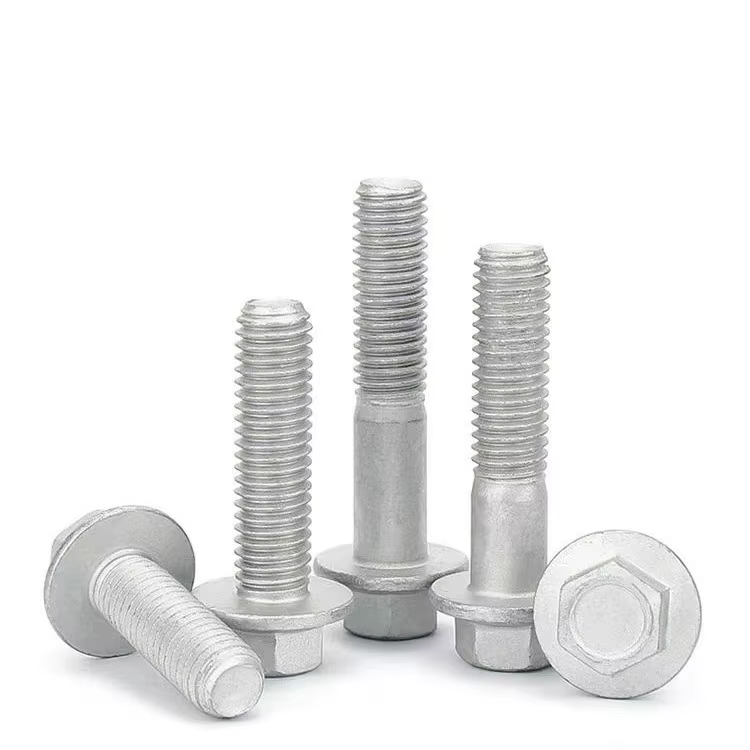
Por Que o Parafuso de Cabeça Hexagonal se Destaca em Aplicações Pesadas
Engajamento Superior da Ferramenta e Mecânica de Transmissão de Torque
Parafusos de cabeça hexagonal possuem esses seis lados planos que aderem firmemente e de forma consistente às chaves, reduzindo significativamente o deslizamento em situações de alto torque. A própria forma funciona muito bem para transferir a força diretamente da ferramenta utilizada até o parafuso. Alguns testes demonstram, na verdade, que essa configuração pode atingir uma eficiência de cerca de 90% na transferência de torque, conforme pesquisas publicadas em periódicos de engenharia mecânica. Cabeças de parafusos convencionais, redondas ou com reentrâncias, simplesmente não resistem tão bem ao chamado 'efeito de desgaste por torção' (cam-out), especialmente ao trabalhar com cargas muito elevadas. Imagine tentar aplicar mais de 300 libras-pé de torque em algo crítico, como estruturas de aço para edifícios ou na fixação de fundações, onde a precisão é fundamental.
Distribuição otimizada da carga nas superfícies de junção
Parafusos sextavados pesados têm uma superfície plana maior em comparação com parafusos sextavados convencionais, o que significa que distribuem a pressão cerca de 35% menos sobre o material que estão fixando, quando se aplica a mesma força. A área de contato extra larga ajuda a direcionar a tensão para fora da região onde o parafuso está posicionado, evitando assim que materiais mais macios — como peças de alumínio ou materiais compostos usados em juntas — sejam comprimidos localmente. Isso resulta em uma pressão mais uniforme em todo o ponto de conexão. Essa característica é fundamental para manter vedações herméticas em sistemas sob pressão e também para evitar pequenos movimentos que, com o tempo, causam desgaste. Pense, por exemplo, nas máquinas vibratórias presentes em fábricas ou nas grandes prensas utilizadas em instalações industriais.
Validação no Mundo Real: Parafusos Sextavados Pesados ASTM A325 na Montagem da Torre de Aerogeradores
Os parafusos sextavados pesados ASTM A325 utilizados nas torres de turbinas eólicas tornaram-se equipamento padrão porque suportam com eficácia essas intensas cargas cíclicas de tração superiores a 50.000 psi ao longo de sua vida útil esperada de 25 anos. O que torna esses parafusos tão eficazes é seu projeto especial de flange de apoio, que mantém tudo firmemente apertado mesmo quando a torre oscila para frente e para trás, com desvios médios atingindo cerca de 10 graus em velocidades do vento de aproximadamente 50 milhas por hora. Esse tipo de estabilidade é fundamental para manter as juntas seguras ao longo do tempo. A análise do desempenho real em campo, proveniente de locais costeiros, revela outra história digna de nota. A taxa de falhas é de apenas 0,02%, superando outros tipos de fixadores que enfrentam dificuldades em condições adversas, como corrosão por água salgada, variações de temperatura e padrões de vento imprevisíveis, conforme relatado pela Associação Americana de Energia Eólica no relatório do ano passado.
Parafuso de Cabeça Sextavada vs. Alternativas Comuns: Desempenho sob Cargas Extremas
Resistência à Tração e à Cisalhamento: Parafusos Hexagonais Pesados versus Parafusos de Fixação e Parafusos de Madeira
Quando se trata de resistência, os parafusos sextavados pesados destacam-se dos parafusos de carroceria e dos parafusos de fixação, especialmente ao lidar com cargas dinâmicas. Os parafusos sextavados pesados ASTM A490 suportam resistências à tração superiores a 150 ksi. Os parafusos de carroceria simplesmente não conseguem acompanhar esse desempenho devido ao seu design com pescoço quadrado, apresentando cerca de 30% menos capacidade de cisalhamento sob cargas de longa duração, conforme testes SAE J429. Já os parafusos de fixação enfrentam grandes dificuldades frente a forças de cisalhamento repetidas: suas roscas tendem a desgastar-se rapidamente, pois a tensão concentra-se exatamente na região onde o fuste encontra a rosca. No entanto, os parafusos sextavados pesados possuem uma vantagem que os demais não têm: sua ampla área de apoio, combinada com a forte ligação entre a cabeça e o fuste, distribui eficientemente tanto as forças de cisalhamento quanto as de flexão. Isso ajuda a manter as juntas firmemente apertadas, mesmo em aplicações de pontes, onde as cargas de cisalhamento podem ultrapassar 75 kN. Testes realizados segundo a norma ASTM F3125 demonstram que esses parafusos reduzem a relaxação da junta em aproximadamente 40% em comparação com parafusos de carroceria submetidos às mesmas vibrações. É compreensível, portanto, por que os engenheiros os preferem em conexões críticas.
Controle de Torque e Reutilização: Parafusos de Cabeça Sextavada Pesada vs. Parafusos de Cabeça Cilíndrica com Fenda
Em situações que exigem manutenção intensiva, parafusos sextavados pesados geralmente oferecem melhor controle sobre o torque e podem ser reutilizados mais vezes em comparação com aqueles pequenos parafusos de cabeça cilíndrica com fenda interna hexagonal, conhecidos por todos como SHCS. Ao utilizar chaves padrão, os técnicos conseguem aplicar cerca de 25% mais torque antes que qualquer deformação comece a ocorrer, ao contrário daquelas pequenas fendas internas hexagonais dos SHCS, que acabam concentrando tensões e desgastando-se mais rapidamente. Após cinco ciclos de reutilização, aproximadamente, esses SHCS tendem a apresentar cerca de 15% mais desgaste nas áreas de acionamento, pois as paredes da fenda começam a sofrer deformação plástica. Já os parafusos sextavados pesados mantêm sua forma e proporcionam leituras de torque consistentes em múltiplas utilizações. Outra grande diferença está na forma como lidam com variações de torque. Esses parafusos sextavados funcionam bem mesmo com flutuações de ±10%, conforme estabelecido pelas normas da ASME, sem apresentar problemas de galling, enquanto os SHCS exigem ajustes de torque extremamente precisos para evitar que se danifiquem totalmente. O que realmente importa, contudo, é que o acesso externo com chave elimina o risco de detritos ficarem presos no interior, reduzindo aproximadamente 30% o tempo de inatividade imprevisto durante inspeções em plataformas offshore, onde as fendas internas dos SHCS frequentemente sofrem corrosão e emperramento. Um estudo apresentado na Offshore Technology Conference em 2022 (número do artigo OTC-31287) confirmou essas conclusões.
Seleção de Material, Grau e Revestimento para Ambientes Exigentes
Análise Detalhada da Classificação de Resistência: ISO 8.8, 10.9 e SAE Grau 8 em Juntas Críticas à Fadiga
Escolher a classe de resistência adequada é fundamental ao trabalhar com parafusos de cabeça sextavada em juntas sujeitas a fadiga. Os parafusos ISO 8.8 possuem uma resistência à tração mínima de aproximadamente 800 MPa e escoam em torno de 640 MPa, tornando-os boas opções para cargas estáticas ou para cargas com ciclagem moderada, como as observadas em estruturas metálicas. No entanto, ao lidar com vibrações de alta frequência ou cargas alternadas — presentes, por exemplo, em suportes de motores e caixas de câmbio — os engenheiros normalmente optam por parafusos ISO 10.9, que oferecem resistência à tração de 1000 MPa e limite de escoamento de 900 MPa, ou por parafusos SAE Grau 8, com resistência à tração de 1034 MPa e limite de escoamento de 940 MPa. Essas classes superiores apresentam maior resistência ao aparecimento de trincas e mantêm sua pré-carga por mais tempo. O que torna os parafusos Grau 8 especiais é o seu tratamento térmico de têmpera e revenimento, que aumenta tanto a ductilidade quanto o limiar em que a fadiga começa a se manifestar. Ensaios reais demonstram que esses parafusos reduzem os problemas de afrouxamento das juntas em aproximadamente 17% em comparação com alternativas mais baratas, conforme estabelecido na norma ASTM F3125-22.
| Grau | Resistência à tração (MPa) | Resistência ao escoamento (MPa) | Aplicação Ideal |
|---|---|---|---|
| ISO 8.8 | 800 | 640 | Estruturas de sustentação |
| ISO 10.9 | 1000 | 900 | Juntas de máquinas pesadas |
| SAE Grade 8 | 1034 | 940 | Aeroespacial/fora de estrada |
Estratégias de Mitigação da Corrosão: Aço Inoxidável 316 vs. Aço Carbono Galvanizado a Quente
Ao lidar com condições severas, como plataformas offshore, instalações químicas e estruturas marinhas, a escolha dos materiais adequados influencia significativamente a durabilidade dos equipamentos e a segurança dos trabalhadores. Os parafusos sextavados em aço inoxidável 316 resistem à corrosão por cloretos, mesmo em concentrações de cerca de 500 ppm, conforme estabelecido na norma ISO 3506-1, o que torna esses parafusos excelentes opções para áreas constantemente expostas à água do mar ou onde a névoa salina é comum. Parafusos sextavados em aço carbono galvanizados a quente oferecem boa relação custo-benefício, proporcionando ainda uma proteção sólida graças aos seus revestimentos de zinco sacrificiais, que superam 100 horas nos ensaios de névoa salina ASTM B117. Contudo, há um aspecto importante a lembrar sobre o tratamento galvanizado a quente: ele adiciona aproximadamente 40 mícrons à superfície do parafuso, portanto os engenheiros precisam ajustar corretamente as configurações de torque para obter a tensão adequada durante a aperto. E falando em ambientes agressivos, ao trabalhar com ácidos como o ácido sulfúrico, o molibdênio presente no aço inoxidável 316 confere-lhe cerca de três vezes mais resistência à corrosão por pites comparado ao aço inoxidável 304 convencional, fato confirmado por ensaios realizados segundo a norma NACE MR0175 para aplicações em serviço ácido (sour service).
Perguntas Frequentes
O que torna os parafusos de cabeça hexagonal mais eficazes em aplicações pesadas?
Os parafusos de cabeça hexagonal são preferidos em aplicações pesadas devido ao seu excelente engajamento com ferramentas, à eficiência aprimorada na transmissão de torque e à distribuição otimizada de cargas.
Por que os parafusos hexagonais pesados são utilizados na construção de torres de turbinas eólicas?
Parafusos hexagonais pesados, como os conformes à norma ASTM A325, são empregados em torres de turbinas eólicas porque resistem a intensas cargas cíclicas de tração e mantêm a estabilidade estrutural mesmo em condições adversas.
Como os parafusos hexagonais pesados se comparam a outros tipos de parafusos, como os parafusos de cabeça redonda e os parafusos de madeira?
Os parafusos hexagonais pesados oferecem resistência à tração e à cisalhamento superiores em comparação com os parafusos de cabeça redonda e os parafusos de madeira, suportando forças agressivas de cisalhamento sem deformação.
Quais são as considerações para a seleção de materiais e revestimentos para parafusos de cabeça hexagonal?
A seleção de material e revestimento, como a escolha entre aço inoxidável 316 e aço carbono galvanizado a quente, é crucial para garantir resistência à corrosão em ambientes exigentes.
Sumário
- Por Que o Parafuso de Cabeça Hexagonal se Destaca em Aplicações Pesadas
- Parafuso de Cabeça Sextavada vs. Alternativas Comuns: Desempenho sob Cargas Extremas
- Seleção de Material, Grau e Revestimento para Ambientes Exigentes
-
Perguntas Frequentes
- O que torna os parafusos de cabeça hexagonal mais eficazes em aplicações pesadas?
- Por que os parafusos hexagonais pesados são utilizados na construção de torres de turbinas eólicas?
- Como os parafusos hexagonais pesados se comparam a outros tipos de parafusos, como os parafusos de cabeça redonda e os parafusos de madeira?
- Quais são as considerações para a seleção de materiais e revestimentos para parafusos de cabeça hexagonal?