
 EN
EN
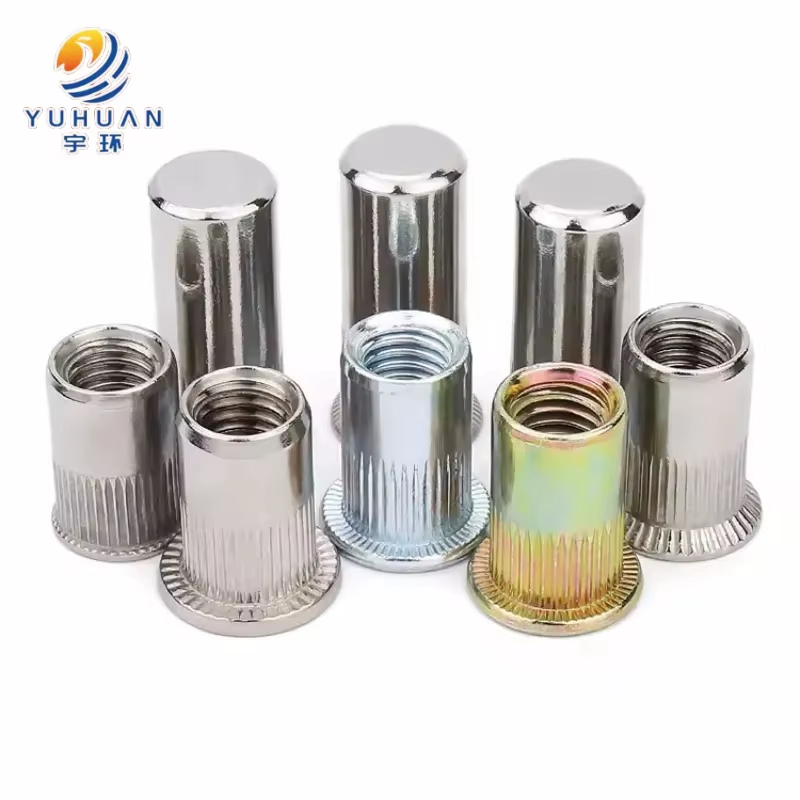
Engineering Advantages: Torque Resistance and Spin-Out Prevention
Hexagonal grip mechanics: How the half-hex body design delivers 42% higher torsional resistance vs. round-body rivet nuts
A half-hex body design stops rotational failures dead in their tracks when it comes to automotive parts. The six flat sides really grab onto whatever surface they're attached to, which keeps the fastener locked in place even during those intense installations where torque can reach as high as 32 Newton meters. We've seen test results from industry standards set in 2023 showing these shapes boost resistance against twisting forces by around 42 percent compared to regular round designs. This feature matters a lot for components like powertrain brackets that deal with constant vibrations measuring about 15 grams root mean square on average. What makes these fasteners stand out is how well they hold their grip through extreme temperature changes ranging from minus 40 degrees Celsius all the way up to 120 degrees. They just keep working reliably over time without coming loose or slowly shifting position.
Low-profile flat head + thin-wall construction for flush, high-strength mounting in space-constrained modules
The flat head half hex body design of these rivet nuts tackles those pesky tight clearance issues common in today's vehicle designs. At only 0.8 times diameter in height, they lie completely flat against whatever surface they're installed on. This makes them really useful for tricky spots like battery tray seams, reinforcing areas around door hinges, and other structural points where there's barely any room to spare (sometimes less than 3mm). The thin wall construction cuts down on material thickness by about 30% compared to regular rivet nuts, yet still keeps almost all their strength properties intact at around 98%. What does this mean? Well, mechanics can install them securely into 1.2mm thick ultra high strength steel without worrying about warping or damaging the underlying material. Plus, these components hold up under serious stress too, able to withstand shear forces of 12kN right in critical crash zones. For electric vehicles especially, where battery enclosures need maximum protection but also have strict space constraints, these specialized fasteners become absolutely essential parts of the build process.
Automotive Application Drivers: EV Battery Trays and Powertrain Mounting
Dominance in EV battery tray fastening: 68% adoption among Tier-1 suppliers (2023 AutoFastener Benchmark Report)
Flat head half hex body rivet nuts are quickly becoming the go-to choice for assembling EV battery trays these days. According to recent data from the 2023 AutoFastener Benchmark Report, nearly two thirds of Tier-1 suppliers have started specifying them for mounting battery enclosures. What makes these components so attractive? They bring together three important qualities needed in battery assembly work: they stay put during installation (anti-rotation stability), handle temperature changes well (thermal resilience), and sit flush against surfaces (flush-mounting capability). These characteristics help maintain those crucial leak-proof seals around tight clusters of battery cells. Compared to traditional round body options, the half-hex shape can take more installation force without coming loose, even when subjected to repeated heating and cooling cycles. This matters a lot in energy storage applications because vibrations can cause serious safety issues and costly warranty claims down the road.
Vibration resilience: 99.3% clamping force retention after 10M cycles at 25g RMS in GM Ultium powertrain testing
When it comes to powertrain applications where joints are constantly under mechanical stress, the flat head half hex rivet nut really stands out for how tough it is. Tests on GM's Ultium platform showed that these nuts kept 99.3% of their clamping force even after going through 10 million vibration cycles at 25g RMS. That's actually about 12 to 15% better than regular fasteners in areas that see a lot of action such as motor mounts and suspension links. What makes them work so well? The hexagonal shape spreads out shear forces across those six sides, and the thin wall design manages to stay flexible enough without sacrificing strength when needed most.
| Performance Metric | Flat Head Half Hex Rivet Nut | Standard Rivet Nut |
|---|---|---|
| Clamping Force Retention (10M cycles) | 99.3% | 84–87% |
| Vibration Resistance (g RMS) | 25g sustained | 18–20g max |
| Installation Speed (seconds/joint) | 3.2 | 4.5 |
This blend of speed, strength, and reliability supports high-volume EV production—particularly where fastener-related warranty claims could cost manufacturers $740k annually per model line.
Strategic Fit: Enabling Lightweighting and Multi-Material Platforms
Seamless integration with aluminum and CFRP substrates—eliminating secondary operations and galvanic corrosion risks
Flat head half hex body rivet nuts work really well in lightweight structures made from multiple materials, particularly when aluminum alloys are combined with carbon fiber reinforced polymers (CFRP). The unique half-hex shape actually forms strong mechanical connections as it gets installed, so there's no need for extra parts like weld nuts, glues, or threaded inserts. What makes this stand out is that it's all done in one step, which saves money on labor costs somewhere around 15 to maybe even 22 percent and makes automated assembly much simpler. When it comes to preventing corrosion between different metals, these nuts come in special versions matched to specific materials. For instance, A2 stainless steel ones play nicely with aluminum electrically, whereas polymer coated variants keep CFRP components isolated electrically. Testing shows they last about 40% longer in salt spray conditions compared to regular fasteners. Plus, they stay flush mounted just like traditional hardware but without sacrificing space efficiency needed for things like battery enclosures where every millimeter counts.
Specification Best Practices for Flat Head Half Hex Body Rivet Nut Selection
Material-grade alignment: A2 stainless steel for under-hood corrosion resistance vs. Al7075-T6 for weight-critical interior modules
Choosing the right materials depends on what they'll face in their environment and what functions they need to perform. Parts under the hood that deal with road salt, extreme temperatures, and chemicals work best with A2 stainless steel since it resists corrosion really well without losing strength. Inside the vehicle where things are calmer, Al7075-T6 aluminum alloy makes sense for components near batteries. It cuts down on weight by about 35% compared to similar steel parts but still holds up mechanically. When engineers pick fasteners that match both the base material and where they're going to be used, they avoid problems like galvanic corrosion happening too soon. This approach also helps car manufacturers reach their targets for making vehicles lighter overall.
Installation protocol essentials: Tool compatibility, ±0.1 mm hole tolerance control, and torque-to-yield verification
Getting maximum joint integrity down right takes some serious attention to detail. The mandrel tools need to apply just the right amount of radial force so they can properly engage those anti-rotation features on the half-hex body while still being careful not to damage those delicate thin wall substrates. Hole tolerances are pretty critical too. They really need to stay within about plus or minus 0.1 mm if we want that full hexagonal grip to work properly and avoid problems with parts spinning out when things get shaken up in high vibration environments. When it comes to torque-to-yield checks, technicians record the actual installation numbers against what's considered normal ranges usually around 8 to 12 Newton meters. This helps make sure the clamping force gets distributed evenly throughout both structural components and powertrain systems without any hot spots developing.
Proven outcomes:
- <2% installation defect rates at Tier-1 assembly plants using calibrated protocols
- Elimination of secondary rework through precision tooling alignment
FAQ
What is the main advantage of a half-hex body design in rivet nuts?
The half-hex body design provides increased torsional resistance, improving grip and preventing rotational failures. It offers about 42% higher resistance compared to round body designs, making it ideal for parts subjected to high torque and vibration.
Why are flat head half hex body rivet nuts preferred for EV battery trays?
These rivet nuts provide anti-rotation stability, thermal resilience, and flush mounting, making them essential for maintaining leak-proof seals in battery tray assemblies. They can withstand installation and operational stresses better than round body options.
How do flat head half hex rivet nuts contribute to EV production?
They support high-volume production with their speed, strength, and reliability, reducing the risk of warranty claims related to fastener failures, which can be costly for manufacturers.
How are these rivet nuts advantageous in multi-material assemblies?
The hex shape forms strong mechanical connections without extra parts, reducing labor costs and simplifying automation. They prevent galvanic corrosion with material-specific versions, enhancing durability in mixed-material structures.
What is crucial in the installation of these rivet nuts?
Ensuring tool compatibility, maintaining hole tolerances within ±0.1 mm, and conducting torque-to-yield verification are critical for achieving maximum joint integrity and performance.
Table of Contents
- Engineering Advantages: Torque Resistance and Spin-Out Prevention
- Automotive Application Drivers: EV Battery Trays and Powertrain Mounting
- Strategic Fit: Enabling Lightweighting and Multi-Material Platforms
- Specification Best Practices for Flat Head Half Hex Body Rivet Nut Selection
-
FAQ
- What is the main advantage of a half-hex body design in rivet nuts?
- Why are flat head half hex body rivet nuts preferred for EV battery trays?
- How do flat head half hex rivet nuts contribute to EV production?
- How are these rivet nuts advantageous in multi-material assemblies?
- What is crucial in the installation of these rivet nuts?