
 EN
EN
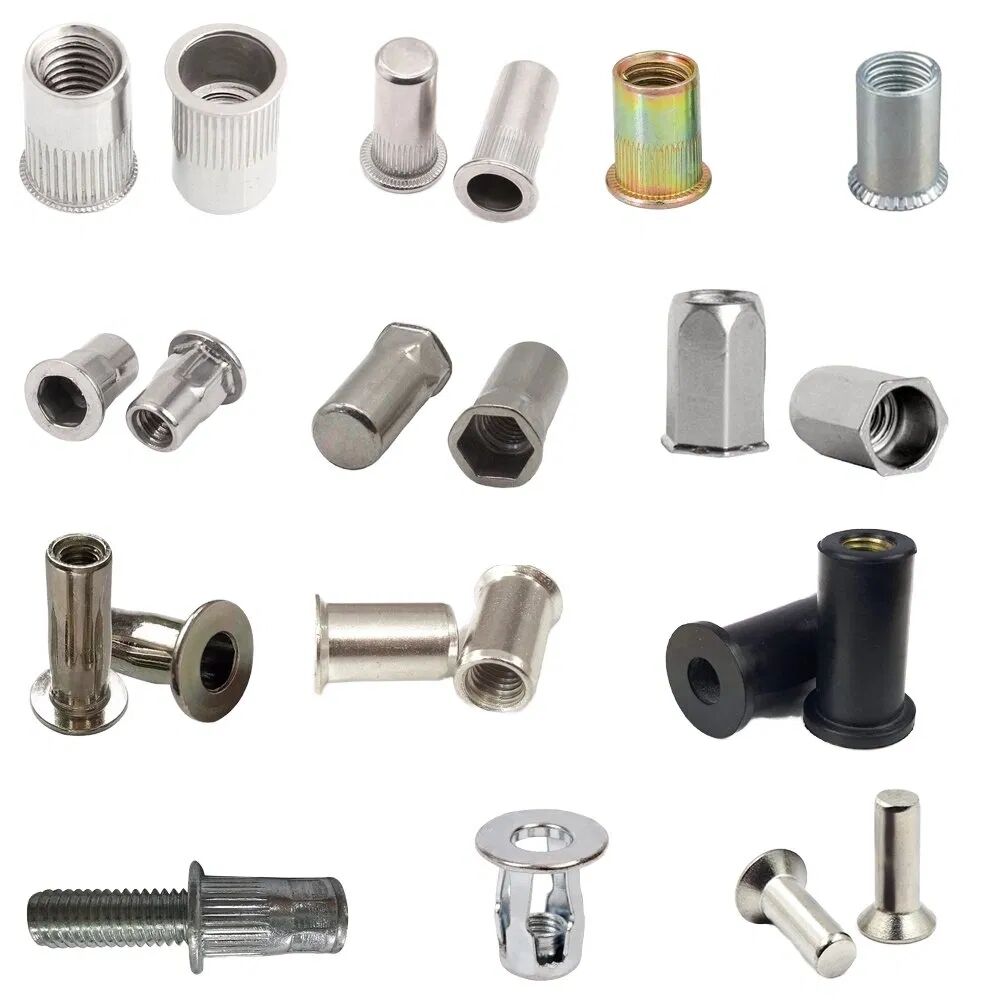
Understanding Rivet Nut Grip Range for Thin Sheet Metal
Why Grip Range Is Critical in Thin Sheet Metal Applications
Grip range defines the minimum and maximum material thickness a rivet nut can securely fasten. In thin sheet metal—especially below 1.5 mm—the margin for error is extremely narrow. Using a rivet nut outside its specified grip range leads to poor seating, reduced load capacity, and joint failure. If the grip range is too wide, the rivet nut cannot form a proper bulge, risking rotation or loosening; if too narrow, the substrate may deform or crack during installation. For example, an M6 rivet nut rated for 2–5 mm will fail catastrophically on 0.8 mm aluminum, resulting in pull-through under minimal load. Correct grip selection ensures full deformation against the backside of the sheet, creating a secure, load-bearing thread.
Calculating Optimal Grip Range for Aluminum vs. Steel Substrates
Material hardness significantly influences grip performance. On 1.0 mm low-carbon steel, an M6 carbon-steel rivet nut achieves ~6–8 kN pull-out force; on equivalent aluminum alloy, that drops to 4–6 kN due to lower shear strength. To compensate, prioritize rivet nuts with a narrow, thickness-matched grip range—typically 0.5–1.5 mm for thin metals. Multi-grip variants (e.g., 0.5–6 mm) reduce inventory complexity while maintaining reliability across variable gauges. For aluminum, select shorter-shank or aluminum-alloy rivet nuts to avoid over-compression and microcracking. Always verify the manufacturer’s published grip range against measured substrate thickness—not nominal gauge—to ensure optimal forming and clamp load retention.
Precision Hole Preparation and Deburring for Reliable Rivet Nut Installation
Drilling Tolerances and Alignment Best Practices for <1.5 mm Materials
Precision hole preparation is foundational for rivet nut integrity in ultra-thin sheet metal. Maintain hole diameters within ±0.05 mm of the rivet nut’s specified pilot size—exceeding this tolerance risks thread stripping or incomplete expansion. For aluminum, use sharp cobalt or carbide-tipped drill bits at 2,500 RPM to minimize heat-induced warping; for steel, reduce speed to ~800 RPM and apply peck drilling to prevent work hardening. Always use drill bushings or pilot holes to ensure perpendicular alignment—angular deviation beyond 2° induces uneven stress and premature joint fatigue. Confirm circularity with plug gauges: oval holes degrade pull-out strength by up to 40%, per industry fastener integrity studies.
Deburring Techniques That Prevent Pull-Through in Blind Rivet Nut Installation
Deburring isn’t optional—it’s a structural necessity in thin-gauge blind installations. Micro-fractures left by burrs act as stress concentrators that propagate under vibration or thermal cycling, directly triggering pull-through failure. For sub-1.5 mm materials, combine these validated methods:
- Internal edge treatment: Chamfer hole edges to 0.3 mm depth at 45° using needle files, then remove residual burrs with abrasive nylon brushes;
- Surface polishing: Apply non-woven scrubbing pads (400+ grit) to achieve uniform surface roughness (Ra ≤ 3.2 μm), maximizing flange-to-sheet contact area;
- Critical inspection: Examine hole edges under 10× magnification—especially on aerospace-grade aluminum alloys—to detect subsurface microfractures invisible to the naked eye.
Finish with volatile solvent wipes to eliminate particulate contamination; skipping this step reduces clamp load capacity by 30–50% in blind applications.
Selecting the Right Tool and Rivet Nut Design for Thin Aluminum Sheets
Installing rivet nuts in aluminum sheets under 1.5 mm demands precision tooling and geometry-aware fastener design to prevent distortion and ensure long-term joint integrity.
Pneumatic vs. Manual Tools: Achieving Consistent Torque Below 3 N·m
Manual tools lack the repeatability needed for thin aluminum: inconsistent compression causes localized yielding, thread damage, or incomplete bulge formation. Pneumatic tools deliver precise, repeatable torque control below 3 N·m—reducing substrate distortion risk by 72% compared to manual methods, according to Fastener Tech Journal (2023). For sheets under 0.8 mm, micro-pneumatic systems with integrated torque limiters are essential to prevent warping while ensuring full mechanical interlock.
Wedgehead and Flanged Rivet Nut Designs for Enhanced Shear Load Distribution
Standard cylindrical rivet nuts concentrate stress at a single point beneath the sheet—making them prone to tear-out in thin aluminum. Wedgehead designs expand laterally during setting, increasing load-bearing surface area by 40% and distributing compressive forces more evenly. Flanged variants further improve performance by spreading shear loads across the top surface, reducing point-load failure rates to under 5% in 1.0 mm substrates (Mechanical Joining Quarterly). Both geometries outperform standard models in high-vibration or thermally cycled environments—critical for automotive, aerospace, and electronics enclosures.
Material Compatibility and Long-Term Performance of Rivet Nut Fasteners
Rivet nut material choice dictates corrosion resistance, weight, and long-term mechanical stability. Aluminum rivet nuts offer lightweight, non-magnetic performance but require anodizing or chromate conversion to mitigate galvanic corrosion when paired with dissimilar metals like stainless steel or carbon steel. Stainless steel rivet nuts provide superior tensile and shear strength alongside decades-long service life in humid, saline, or chemically aggressive environments. Carbon steel versions remain cost-effective for dry, indoor applications with moderate load requirements.
Proper grip range matching—combined with controlled installation torque (typically <5 N·m for thin sheets)—prevents thread stripping and preserves clamp load through thermal expansion and cyclic stress. Field data from accelerated life testing shows well-installed rivet nuts retain over 90% of initial clamping force after 100,000 vibration cycles. Validated salt spray test results (e.g., ASTM B117 ≥ 500 hrs) and dimensional stability certifications (e.g., ISO 14570) reinforce confidence in long-term performance—ensuring the fastener assembly meets both functional and regulatory expectations across the product lifecycle.
FAQ
What is the grip range of a rivet nut?
Grip range refers to the minimum and maximum material thickness a rivet nut can securely fasten. Choosing the correct grip range is crucial to ensure proper fastening without risking joint failure or substrate damage.
Why is deburring important for blind rivet nut installation?
Deburring removes micro-fractures and burrs that act as stress concentrators, preventing pull-through failure and enhancing the structural integrity of the joint.
What is the advantage of multi-grip rivet nuts for thin sheet metals?
Multi-grip rivet nuts cover a range of thicknesses, reducing inventory needs while ensuring secure fastening even when material gauges vary.
Are manual tools suitable for installing rivet nuts in thin aluminum?
Manual tools are not recommended for thin aluminum (under 1.5 mm) due to inconsistent torque and compression. Pneumatic tools are preferred for their precision and repeatability.
How does rivet nut material impact performance?
Material choice, such as aluminum, carbon steel, or stainless steel, affects corrosion resistance, weight, and long-term strength. Aluminum offers lightweight benefits, while stainless steel ensures durability in harsh environments.