
 EN
EN
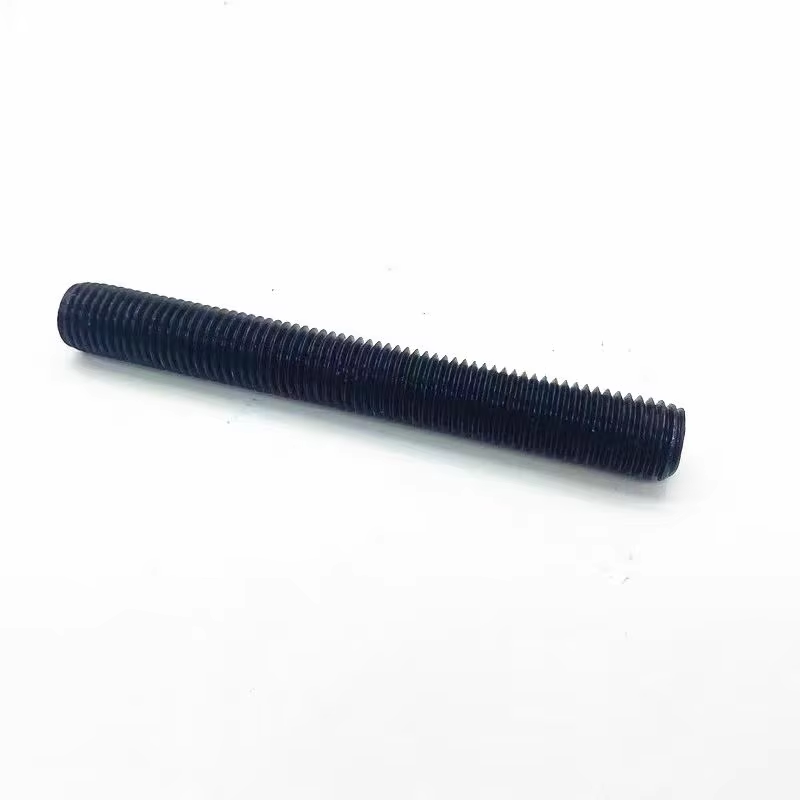
Material Integrity and Certification Standards for High Strength Bolts
ASTM F3125 vs. ISO 3506-1: Aligning Grade Selection (A4-80, A4-100, ASTM A490) with Load and Corrosion Requirements
Material selection for high strength bolts must precisely match mechanical performance to environmental exposure. ASTM F3125 A490 bolts deliver exceptional tensile strength (150 ksi minimum) for structural steel connections but lack inherent corrosion resistance—requiring galvanizing or other protective coatings in aggressive environments. In contrast, ISO 3506-1 austenitic stainless grades like A4-80 and A4-100 provide superior chloride resistance for marine, coastal, or chemical-exposed infrastructure, trading some ultimate strength for long-term durability. Engineering teams should align grade choice early in design using yield strength benchmarks (e.g., A490: 130 ksi; A4-80: 640 MPa; A4-100: 800 MPa) alongside site-specific corrosion risk assessments—not after fabrication.
Heat Treatment Validation and Full Traceability: Why Mill Test Reports and Lot-Level Certifications Are Non-Negotiable
Heat treatment is the defining step for high strength bolt integrity—and its variability poses a silent threat. Metallurgical studies confirm that minor deviations in quenching or tempering—even within nominal process windows—can reduce fracture toughness by up to 40%. Mill Test Reports (MTRs) are essential for verifying chemical composition, tensile/yield properties, and Charpy impact energy at low temperatures. For critical infrastructure—including bridges, wind towers, and seismic bracing—lot-level certification is mandatory. It traces each batch through heat treatment parameters, microstructure verification, and mechanical testing, exposing inconsistencies in grain structure or hardness gradients that standard hardness checks miss. Shipments lacking full traceability documentation must be rejected—no exceptions.
Precision Preload Control in High Strength Bolt Installation
Torque Calibration, Turn-of-the-Nut, and DTIs: Selecting the Right Method for Consistent Clamping Force
Achieving reliable clamping force demands method selection aligned with application risk and environmental conditions. Torque calibration applies rotational force via calibrated tools, converting torque to axial tension—but friction variability introduces ±25% preload scatter. Turn-of-the-nut eliminates friction dependence by rotating the bolt a defined angle beyond snug-tight, leveraging elastic elongation for repeatable stretch. Direct Tension Indicators (DTIs) offer real-time confirmation of target preload through controlled washer deformation, delivering high accuracy with minimal operator influence.
| Method | Accuracy | Friction Sensitivity | Verification Ease |
|---|---|---|---|
| Torque Calibration | Moderate | High | Requires tools |
| Turn-of-the-Nut | High | Low | Angle measurement |
| DTIs | High | Minimal | Visual/measurement |
DTIs are preferred for wind turbine tower flanges and seismic connections where under-tightening risks joint slip during dynamic loading. Turn-of-the-nut excels in high-vibration machinery applications. Torque remains appropriate for general-purpose assemblies—provided lubrication is strictly controlled and verified.
Quantifying Risk: How ±15% Torque Error Causes ≥30% Preload Loss and Compromises Joint Reliability
The torque-preload equation T = K × D × F reveals why friction coefficient (K) dominates uncertainty: a ±15% torque deviation compounds with just a 25% K fluctuation—common from surface contamination, inconsistent lubricant application, or thread damage—to produce ≥30% preload loss. This directly undermines joint reliability:
- Under-tightening permits micro-movement, accelerating fatigue cracking and enabling gasket leakage under cyclic loads.
- Over-tightening induces excessive residual stress, promoting stress corrosion cracking—reducing service life by 40–60% in corrosive settings. Field data shows 83% of flange failures originate from preload inconsistency. Precision control isn’t procedural detail—it’s foundational to preventing slippage, loosening, or catastrophic disassembly.
Friction Management and Human Factors in High Strength Bolt Assembly
Lubrication, Plating, and Surface Roughness: Controlling Friction Coefficient Variability to Stabilize Torque–Preload Relationship
Friction coefficient (K) is the largest source of torque-to-preload uncertainty—varying up to 30% across uncontrolled installations. Lubricants reduce dispersion by 40–60%, forming stable films that mitigate surface irregularities and oxidation. Zinc flake plating homogenizes thread topography while introducing consistent, low-friction characteristics—keeping K variance within ±0.05. Surface roughness below 1.6 µm Ra further optimizes contact distribution, minimizing unpredictable stick-slip behavior. These controls collectively stabilize the torque-preload relationship, reducing the risk of dangerous under-tension. Operators must validate consistency using witness marks and on-site friction testing—especially since manual application errors account for 18% of measured preload deviations.
From Joint Failure to Systemic Risk: Reliability Consequences of Suboptimal High Strength Bolt Practices
Suboptimal practices—whether inadequate material certification, inconsistent preload, or unmanaged friction—convert localized bolt failures into systemic threats. A single fatigue-initiated bolt fracture redistributes load across adjacent fasteners, accelerating cascading failure in interconnected joints. In cyclic-loading structures, 30% preload variation increases joint failure probability by over 65%. Beyond mechanical collapse, consequences include unplanned operational downtime, worker safety incidents, and regulatory penalties for non-compliance with ASTM F3125, ISO 3506-1, or AISC 360 requirements. Mitigation requires end-to-end discipline: certified materials with full traceability, validated installation methods matched to application risk, and rigorously controlled friction management—all grounded in first-hand engineering experience and authoritative standards.
FAQ
What is the main difference between ASTM F3125 and ISO 3506-1 bolts?
ASTM F3125 bolts are known for high tensile strength but require coatings for corrosion resistance, whereas ISO 3506-1 bolts, specifically austenitic stainless grades, offer superior resistance to corrosion, especially in chloride-rich environments.
Why is traceability important for high strength bolts?
Traceability ensures that each batch of bolts can be traced back through its production process, verifying that heat treatment and mechanical properties are consistent. It's vital to prevent inconsistencies that could compromise structural integrity.
What are Direct Tension Indicators (DTIs) and why are they used?
DTIs are washers that provide real-time confirmation of target preload through controlled deformation, offering a reliable measure of clamping force. They are used to ensure accurate and consistent bolt tensioning, especially in dynamic load conditions.
How does friction affect bolt preload during installation?
Friction introduces variability in the torque-preload relationship, which can lead to preload loss or excess. Managing friction through lubrication, plating, and surface preparation is critical to stabilizing torque and ensuring that the desired preload is achieved consistently.
Table of Contents
- Material Integrity and Certification Standards for High Strength Bolts
- Precision Preload Control in High Strength Bolt Installation
- Friction Management and Human Factors in High Strength Bolt Assembly
- From Joint Failure to Systemic Risk: Reliability Consequences of Suboptimal High Strength Bolt Practices
- FAQ