
 EN
EN
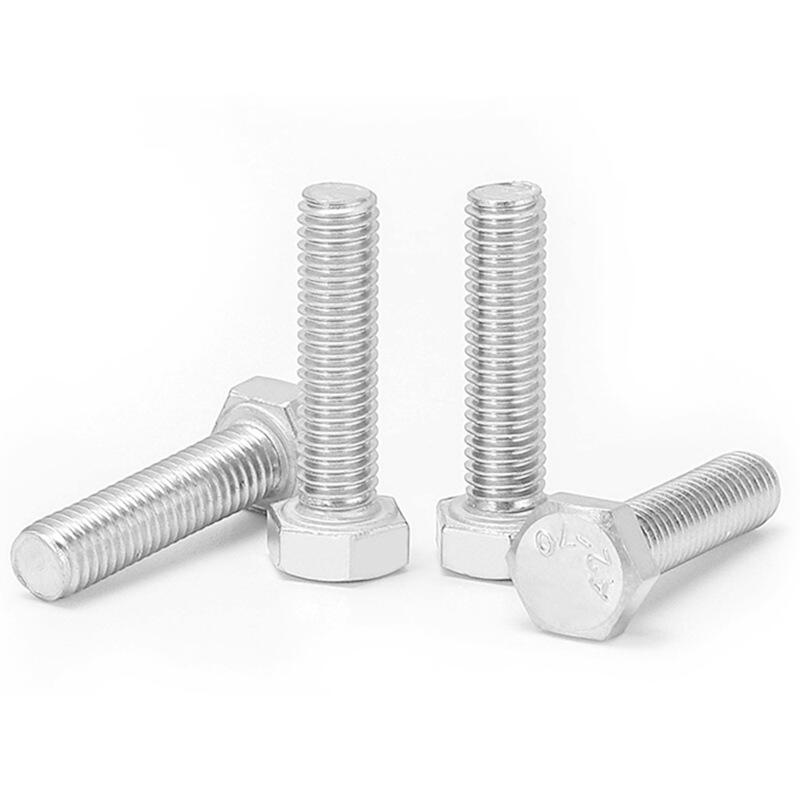
Why Hexagonal Head Bolts Are Critical for Precision Mechanical Assembly
Dimensional accuracy and ISO 4014 tolerances as non-negotiable drivers of system reliability
High-precision hexagonal head bolts are indispensable in precision mechanical assembly because their dimensional accuracy directly determines system reliability. Even minor deviations from ISO 4014 tolerance specifications—such as a 0.1 mm variance in head height—can disrupt torque transfer by up to 15%, resulting in unpredictable preload and micro-movement at the joint. In applications like robotic arms or CNC spindles, where repeatability is measured in microns, such inconsistencies are catastrophic. The hexagonal head design supports precise tool engagement, but only when critical dimensions—including width across flats and underhead bearing surface flatness—are tightly controlled. This ensures uniform seating, eliminates stress risers, and prevents premature fatigue crack initiation.
Optimized load distribution and torque consistency in high-cycle machinery
Hexagonal head bolts deliver superior load distribution and torque consistency—two pillars of reliability in high-cycle machinery. Their geometry provides a larger bearing surface than square heads, spreading clamping force evenly and reducing localized surface pressure. This minimizes embedding loss during repeated thermal or mechanical cycling. For instance, in an industrial press operating at 200 cycles per minute, a properly manufactured hexagonal head bolt maintains torque within ±5% over 10,000 cycles; a substandard fastener may drift by 20%. A well-executed chamfered underhead radius—per high-quality production standards—further eliminates stress-concentrating sharp edges. Torque consistency also simplifies assembly line calibration: tightening a bolt to 300 N·m with a standard wrench yields predictable clamping force, unlike generic fasteners that demand real-time monitoring. By adhering to prescribed dimensional and geometric specifications, manufacturers reduce variability, extend fatigue life, and ensure long-term operational stability.
Selecting the Right Hexagonal Head Bolt Material and Strength Class
Performance comparison: Class 8.8, 10.9, 12.9, and A2/A4 stainless steel for dynamic loads
Selecting the appropriate material and strength class is essential for reliable performance under dynamic loading. Class 8.8 bolts (800 MPa tensile, 640 MPa yield) suit general machinery with moderate stress. Class 10.9 (1040 MPa tensile, 940 MPa yield) offers higher fatigue resistance for automotive and industrial equipment. Class 12.9—the strongest carbon steel option (1220 MPa tensile, 1080 MPa yield)—is reserved for heavy-duty structural connections. For corrosive environments, A2 (304) and A4 (316) stainless steels provide excellent corrosion resistance, though with lower tensile strength (500–700 MPa). A4 excels in chloride-rich or chemically aggressive settings. Engineers must align grade selection with cyclic load frequency, temperature range, and environmental exposure—over-specifying can increase brittleness, while under-specifying risks premature failure.
Avoiding grade misapplication: Lessons from real-world assembly failures
Misapplying hexagonal head bolt grades has led to costly, preventable failures. A common error is substituting Class 8.8 bolts where Class 10.9 is required—resulting in thread stripping or fracture under specified torque. In one documented case, standard carbon steel bolts were used in a high-vibration pump assembly; repeated loosening caused misalignment and a $50,000 downtime event. Another frequent mistake involves assuming stainless steel bolts—like A2—can replace higher-strength carbon grades without accounting for their lower yield strength, leading to yielding during tightening. To avoid such issues, always cross-reference required strength class against maximum load, torque specifications, and environmental conditions. Implementing a standardized material selection checklist during procurement eliminates guesswork, and requiring tensile test reports from suppliers adds a critical layer of quality assurance.
Bulk Supply Strategies for Hexagonal Head Bolts in High-Mix Manufacturing
Effective bulk supply strategies for high-mix manufacturing balance flexibility with cost control. Standardizing on commonly used sizes and strength classes—where functionally permissible—reduces SKU proliferation and simplifies procurement. Partnering with suppliers offering vendor-managed inventory (VMI) or consignment programs aligns hexagonal head bolt availability with fluctuating production schedules. Integrating Kanban systems supports just-in-time replenishment, minimizing excess stock while maintaining precise assembly timelines across diverse product lines. This disciplined approach enhances operational resilience and cost efficiency—without compromising the integrity of quality-critical fasteners.
Standards, Certification, and Quality Assurance for Hexagonal Head Bolt Procurement
Decoding key differences between ISO 4014, DIN 931, and ASTM A449 — beyond nominal specs
Understanding the functional distinctions among ISO 4014, DIN 931, and ASTM A449 is vital for ensuring mechanical integrity in critical assemblies. Though nominal dimensions overlap, each standard reflects distinct engineering priorities through its tolerancing, material requirements, and testing protocols. ISO 4014 prioritizes dimensional consistency and interchangeability—essential for global automotive and automation supply chains. DIN 931 emphasizes corrosion resistance via specified zinc-plating options, preserving torque reliability in European heavy machinery. ASTM A449 governs pre-hardened mid-carbon alloy bolts designed for North American structural steel applications demanding yield strengths above 92 ksi (634 MPa).
| Standard | Thread Design / Surface | Material Specs | Applied Environment |
|---|---|---|---|
| ISO 4014 | Metric coarse/fine | Class 8.8–12.9 properties | Global process automation |
| DIN 931 | Metric coarse w. options | Enhanced corrosion coatings | European heavy machinery |
| ASTM A449 | Unified thread series | Heat-treatable chromium alloys | Structural steel frameworks |
Beyond nominal specs, engineers should examine technical annexes—particularly thread root radius tolerances, which significantly influence fatigue resistance in high-vibration systems. Prioritizing certified traceability documentation, including cyclical load test reports aligned with actual service conditions, substantially reduces assembly risk.
FAQ Section
Why are hexagonal head bolts important in precision mechanical assembly?
Their dimensional accuracy ensures system reliability by preventing torque transfer issues and eliminating micro-movements at the joint.
What are the advantages of hexagonal head bolts in high-cycle machinery?
They provide superior load distribution and torque consistency, minimizing embedding loss during repeated mechanical or thermal cycling.
How should engineers choose the correct strength class for hexagonal head bolts?
Engineers should align bolt grade selection with cyclic load frequency, environmental settings, and temperature ranges to avoid brittleness or premature failure.
What are the differences between ISO 4014, DIN 931, and ASTM A449 standards?
ISO 4014 focuses on dimensional consistency, DIN 931 emphasizes corrosion resistance, while ASTM A449 applies to pre-hardened carbon alloy bolts intended for structural applications.
How can manufacturers procure hexagonal head bolts for high-mix manufacturing?
Standardizing bolt sizes and strength classes, utilizing vendor-managed inventory, and implementing Kanban systems help achieve cost control and operational flexibility.
Table of Contents
- Why Hexagonal Head Bolts Are Critical for Precision Mechanical Assembly
- Selecting the Right Hexagonal Head Bolt Material and Strength Class
- Bulk Supply Strategies for Hexagonal Head Bolts in High-Mix Manufacturing
- Standards, Certification, and Quality Assurance for Hexagonal Head Bolt Procurement
-
FAQ Section
- Why are hexagonal head bolts important in precision mechanical assembly?
- What are the advantages of hexagonal head bolts in high-cycle machinery?
- How should engineers choose the correct strength class for hexagonal head bolts?
- What are the differences between ISO 4014, DIN 931, and ASTM A449 standards?
- How can manufacturers procure hexagonal head bolts for high-mix manufacturing?