
 EN
EN
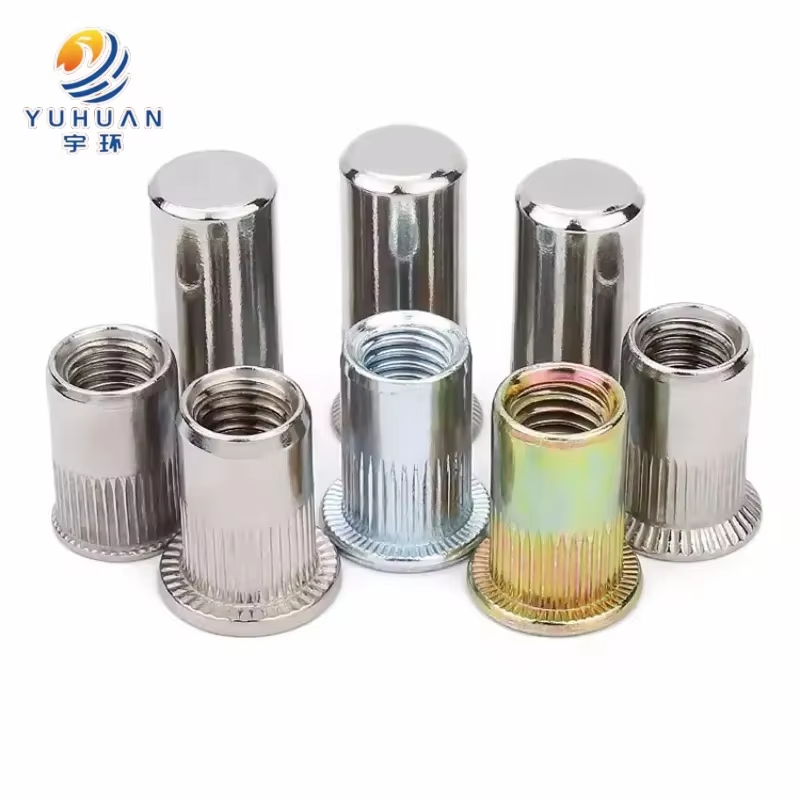
Kinerja Mekanis Inti: Kekuatan Geser, Tarik, dan Torsi pada Mur Keling
Kompromi antara Kekuatan Geser dan Kekuatan Tarik dalam Aplikasi yang Menanggung Beban
Ketika membahas ilmu bahan, kekuatan geser pada dasarnya memberi tahu kita seberapa baik suatu material mampu menahan gaya lateral (gaya mendatar), yang sangat penting untuk komponen seperti rangka mobil atau pelindung mesin. Di sisi lain, kekuatan tarik menunjukkan berapa besar beban vertikal (ke bawah) yang dapat ditahan suatu material, sehingga menjadi krusial untuk bagian-bagian seperti sistem suspensi atau peralatan yang dipasang di langit-langit. Mur berulir jenis rivet nut berbahan baja tahan karat telah diuji sesuai standar ASTM F2906-23 dan menunjukkan kekuatan geser sekitar 520 MPa, yang lebih tinggi sekitar 40% dibandingkan baja karbon biasa. Namun, ada catatan penting: ketika menggunakan varian ekstra kuat dengan rating 750 MPa, kekuatan gesernya justru sedikit menurun. Untuk struktur di mana tekanan lateral (kiri-kanan atau depan-belakang) merupakan faktor utama, sebagian besar insinyur akan memfokuskan perhatian pada pencapaian sifat geser yang optimal. Itulah mengapa banyak yang kini memilih desain flens tebal, karena desain tersebut mampu menyebarkan gaya secara lebih merata di seluruh permukaan tempat pemasangannya, sehingga mengurangi risiko kerusakan di titik-titik tertentu.
Kekuatan Torsi dan Dampak Langsungnya terhadap Integritas Ulir serta Konsistensi Flens
Jumlah torsi yang tepat menjaga keutuhan ulir selama pemasangan dan mempertahankan sambungan yang aman bahkan ketika terpapar pergerakan serta tekanan konstan. Mur keling yang mampu menahan torsi minimal 10 Newton meter tetap kokoh di tempatnya meskipun mengalami ribuan getaran dalam sistem kereta api dan komponen pesawat terbang. Mur keling dengan rating di bawah 5 Nm cenderung cepat longgar setelah dipasang dalam kondisi layanan aktual. Untuk kinerja yang andal, flens harus mengalami deformasi secara konsisten di seluruh luas permukaannya. Pengujian di bawah beban terkendali memverifikasi kebutuhan ini guna memastikan distribusi tekanan yang merata. Mur keling berbentuk semi-heksagonal menawarkan ketahanan terhadap gaya puntir sekitar 30 persen lebih baik dibandingkan versi bulatnya. Bentuk uniknya menciptakan lebih banyak titik kontak yang membantu mencegah rotasi serta menjaga keterkaitan ulir secara optimal seiring waktu.
Patokan yang Tervalidasi: Kesesuaian dengan ASTM F2906-23 dan ISO 15482 sebagai Indikator Kualitas
ASTM F2906-23 dan ISO 15482 berfungsi sebagai tolok ukur kualitas definitif, yang mengharuskan verifikasi pihak ketiga di seluruh kriteria kinerja mekanis, termal, dan lingkungan. Standar-standar ini bukan spesifikasi opsional—melainkan mencerminkan ambang batas keandalan dalam kondisi nyata:
| Parameter Kinerja | ASTM F2906-23 Minimum | ISO 15482 Minimum | Dampak Nyata |
|---|---|---|---|
| Kekuatan Tarik | 1.200 N | 1.500 N | Mencegah lepasnya komponen pada perlengkapan langit-langit |
| Kekuatan Geser | 1.000 N | 1.200 N | Tahan terhadap benturan lateral pada peralatan mesin |
| Resistensi getaran | 7.000 siklus | 8.000 siklus | Mempertahankan integritas pada rangka kendaraan bermotor |
Produsen yang bersertifikasi sesuai kedua standar tersebut melaporkan kegagalan di lapangan 60% lebih sedikit selama masa operasional lima tahun dibandingkan alternatif tanpa sertifikasi—hal ini secara langsung mencerminkan pengendalian proses yang disiplin dan keterlacakan bahan.
Pemilihan Bahan untuk Ketahanan dan Kompatibilitas di Berbagai Substrat Industri
Baja Tahan Karat (A2/A4), Aluminium, dan Baja Karbon: Ketahanan terhadap Korosi, Berat, serta Risiko Galvanik
Baja tahan karat tersedia dalam berbagai kelas untuk berbagai aplikasi. Kelas A2 cocok digunakan di sebagian besar lingkungan industri, sedangkan kelas A4 lebih sesuai untuk tempat seperti kapal atau area dengan kadar garam tinggi di udara. Kelemahan utamanya? Bobotnya sekitar 15% lebih berat dibandingkan aluminium—faktor yang sangat signifikan dalam proyek-proyek tertentu. Mur baut karet aluminium jauh lebih ringan, mengurangi bobot hingga sekitar 60% dibandingkan versi baja-nya. Namun, ada catatan penting: mur baut karet aluminium memerlukan insulasi khusus saat digunakan bersama komponen baja karbon biasa guna mencegah terjadinya korosi galvanik yang dapat saling mengikis kedua material tersebut. Baja karbon biasa tanpa lapisan pelindung memberikan kekuatan maksimum dengan harga sekitar separuh dari baja tahan karat. Namun, baja ini mulai berkarat tiga kali lebih cepat di lingkungan lembap kecuali dilindungi dengan lapisan seng (zinc plating). Oleh karena itu, dalam memilih bahan, perusahaan harus mempertimbangkan secara cermat antara biaya yang dikeluarkan dan umur pakai komponen dalam kondisi kerja spesifik mereka.
Kinerja Mur Rivet pada Bahan Non-Logam: Fiberglass, Serat Karbon, dan Plastik Berketebalan Rendah (Ø0,5 mm)
Saat bekerja dengan bahan komposit, pengendalian ekspansi yang tepat sangat penting. Mur keling bertangkai (rivet nuts) yang dipasang menggunakan mandrel menjaga gaya radial di bawah 250 psi selama proses pemasangan, sehingga membantu menghindari masalah delaminasi pada serat karbon dan fiberglass. Bahan-bahan ini memiliki matriks epoksi yang cenderung terdegradasi ketika terpapar tekanan lingkar (hoop stress) berlebih. Sekarang pertimbangkan lembaran plastik yang sangat tipis dengan ketebalan 0,5 mm atau kurang. Desain flens berprofil rendah khusus justru mendistribusikan beban penjepitan ke area permukaan yang luasnya tiga kali lipat dibandingkan model konvensional. Perubahan desain sederhana ini mengurangi risiko robek (tear out) sekitar empat per lima. Berbicara soal bahan, kompatibilitas benar-benar tidak boleh diabaikan. Mur keling nilon bekerja lebih baik daripada mur keling baja pada perlengkapan ABS karena laju ekspansi termal keduanya sangat cocok. Keselarasan ini menghilangkan tegangan siklik yang mengganggu, yang biasanya terakumulasi di titik sambungan seiring waktu.
Kecerdasan Desain: Bagaimana Geometri Mur Keling Menjamin Keandalan Penambatan Sisi Buta
Mur Rivet Ujung Terbuka vs. Ujung Tertutup: Segel, Perlindungan Lingkungan, dan Kesesuaian Aplikasi
Mur rivet buta bekerja sangat baik untuk mengamankan komponen hanya dari satu sisi karena mereka mengalami deformasi secara spesifik saat dipasang, sehingga sama sekali tidak diperlukan akses ke sisi belakang benda yang dikencangkan. Versi ujung terbuka memungkinkan baut menembusnya secara langsung, sehingga sangat cocok digunakan dalam situasi di mana bagian dalam tetap kering, seperti pemasangan braket pada komponen mesin. Namun, ujung terbuka ini tidak mencegah masuknya apa pun—cairan maupun partikel kecil dapat dengan mudah melewatinya. Sebaliknya, desain ujung tertutup justru menciptakan segel yang cukup rapat terhadap elemen eksternal. Untuk pekerjaan di lingkungan laut, di sekitar bahan kimia, atau di mana pun di luar ruangan—di mana air, semprotan garam, atau debu berpotensi meresap ke dalam sambungan seiring waktu—versi yang tersegel ini menjadi sangat penting guna menjaga kekuatan dan keandalan sambungan.
Ketebalan bahan memainkan peran besar dalam memilih jenis pengikat yang tepat. Versi ujung terbuka paling cocok digunakan pada bahan yang lebih tebal, yaitu di atas 1,5 mm, karena tersedia cukup ruang bagi flens untuk mengembang secara optimal. Untuk plastik tipis berketebalan 0,5 mm atau kurang, pilihan ujung tertutup lebih baik karena mencegah masalah sobekan dengan membatasi pergerakan mandrel dan mendistribusikan tekanan secara merata di seluruh permukaan. Pengujian menggunakan semprotan garam menunjukkan bahwa sambungan yang dibuat menggunakan mur keling ujung tertutup bertahan sekitar 40 persen lebih lama dibandingkan yang menggunakan ujung terbuka. Selain itu, desain ujung tertutup ini dilengkapi fitur flens radial bawaan yang meningkatkan ketahanannya terhadap getaran, sehingga mengurangi kegagalan akibat siklus tegangan berulang sekitar seperempatnya dalam aplikasi yang sering mengalami goncangan.
| Fitur | Mur Keling Ujung Terbuka | Mur Keling Ujung Tertutup |
|---|---|---|
| Penyegelan | Terbatas (lubang tembus) | Segel hermetik penuh |
| Terbaik Untuk | Perakitan internal kering | Lingkungan basah/korosif |
| Kesesuaian Material | Logam tebal (>1,5 mm) | Plastik tipis (Ø0,5 mm) |
Geometri bukanlah hal yang kebetulan—melainkan merupakan fondasi keandalan. Konfigurasi yang tidak sesuai mempercepat kegagalan, mulai dari korosi galvanik hingga tarikan substrat melalui lubang. Selalu sesuaikan jenis mur keling dengan kelas paparan lingkungan, orientasi vektor beban, dan batas mekanis substrat.
FAQ
Apa perbedaan utama antara kekuatan geser dan kekuatan tarik?
Kekuatan geser mengukur ketahanan terhadap gaya lateral (mendatar), sedangkan kekuatan tarik mengukur seberapa besar beban vertikal yang dapat ditahan suatu benda.
Mengapa mur keling berbahan stainless steel mungkin menunjukkan penurunan kekuatan geser pada nilai kekuatan tarik yang lebih tinggi?
Versi yang lebih kuat mungkin mengorbankan sebagian kapasitas gesernya akibat perubahan dalam formulasi material atau perlakuan panas guna mencapai kekuatan tarik yang lebih tinggi.
Bagaimana kekuatan torsi memengaruhi kinerja mur keling?
Kekuatan torsi yang tepat menjamin integritas ulir dan menjaga keandalan sambungan, sehingga mengurangi risiko kendurnya sambungan akibat beban atau getaran.
Apa keuntungan mur keling ujung tertutup?
Mur rivet ujung tertutup memberikan penyegelan hermetik penuh, sehingga ideal untuk lingkungan basah atau korosif.